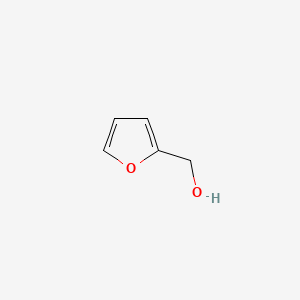
FURFURYL ALCOHOL
CAS 98-00-0 · also known as Furfuryl alcohol · other
FURFURYL ALCOHOL. Formula: C5H6O2. MW: 98.10. IUPAC: furan-2-ylmethanol
FURFURYL ALCOHOL is an other ingredient used in skincare formulations.
Quick facts
Description: FURFURYL ALCOHOL — FURFURYL ALCOHOL. Formula: C5H6O2. MW: 98.10. IUPAC: furan-2-ylmethanol.
Quick Facts:
- Category: other
- Also Known As: Furfuryl alcohol
Proven Benefits At A Glance:
- Furfuryl alcohol is a chemical found in heat-treated foods and used as a flavoring agent
- Animal studies have raised some safety concerns, though research is still developing
- It can cause skin irritation and mild allergic sensitization in testing
- Lung exposure in animal studies triggered airway inflammation and immune responses
- The chemical may interact with enzymes in your body in ways that need further study
Chemical Overview
Methyl parathion is an insecticide that does not occur naturally in the environment. Pure methyl parathion exists as white crystals. Impure methyl parathion is a brownish liquid that smells like rotten eggs.Methyl parathion is used to kill insects on farm crops, especially cotton. The EPA now restricts how methyl parathion can be used and applied; only trained people are allowed to spray it. Methyl parathion can no longer be used on food crops commonly consumed by children. Methyl parathion is a white crystalline solid which is often dissolved in a liquid solvent carrier. The commercial product is a tan liquid (xylene solution) with a pungent odor. It is slightly soluble to insoluble in water. Usually with the liquid solvent it is a combustible liquid. It is toxic by inhalation, ingestion and skin absorption. It is used as an insecticide. Parathion-methyl is a C-nitro compound that is 4-nitrophenol substituted by a (dimethoxyphosphorothioyl)oxy group at position 4. It has a role as an acaricide, an agrochemical, an antifungal agent, an EC 3.1.1.8 (cholinesterase) inhibitor, an EC 3.1.1.7 (acetylcholinesterase) inhibitor, a genotoxin and an environmental contaminant. It is an organothiophosphate insecticide, a C-nitro compound and an organic thiophosphate. It is functionally related to a 4-nitrophenol.
Source(s): Agency for Toxic Substances and Disease Registry (ATSDR), ChEBI, CAMEO Chemicals, via PubChem
Comedogenicity
Similar Ingredients

📰 More News
-
The CCL20-CCR6 axis predominantly drives IL-17-mediated psoriasis while modestly contributing to papain-induced type 2 inflammation
PubMed · Jul 11, 2026
-
SkinCeuticals Just Reformulated Its C E Ferulic Serum
Allure · Jul 20, 2026
-
Are Sunscreen Oils Just Tanning Oils in Disguise? Experts Weigh In
Allure · Jul 20, 2026
-
Update to RIFM fragrance ingredient safety assessment, propenylguaethol, CAS Registry Number 94-86-0
PubMed · Jul 20, 2026
-
Earth Harbor Obscura Night Repair Concentrate Review
Allure · Jul 21, 2026
-
Okay, We’ll Bite: Fruity Perfumes Are Cool
Allure · Jul 21, 2026