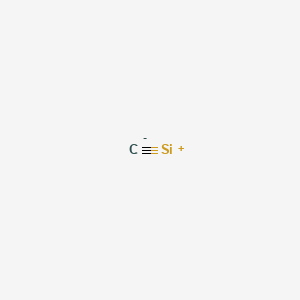
Description: SILICON CARBIDE WHISKERS — SILICON CARBIDE WHISKERS. Formula: CSi. MW: 40.096. IUPAC: methanidylidynesilanylium.
Quick Facts:
- Category: other
- Also Known As: Silicon carbide whiskers
Proven Benefits At A Glance:
- Silicon carbide whiskers are one-dimensional nanomaterials with ultra-high thermal conductivity, strength, and hardness
- When incorporated into a gel matrix, they can enhance thermal conductivity of the composite material
- The material has been studied for potential use in thermal management applications
- Industrial hygiene research has characterized their physical properties including size distribution and aerodynamic behavior
Safety tier is a starting heuristic from regulatory status and comedogenic rating, not a dermatological verdict — see our Terms for the full disclaimer. Research confidence reflects how many real cited studies back this ingredient, not the strength of their findings.
🧪 SILICON CARBIDE WHISKERS
SILICON CARBIDE WHISKERS
CAS Number: 409-21-2
Also Known As: Silicon carbide whiskers
Category: other
SILICON CARBIDE WHISKERS. Formula: CSi. MW: 40.096. IUPAC: methanidylidynesilanylium
SILICON CARBIDE WHISKERS is an other ingredient used in skincare formulations.
🌍 Regulatory Status
📊 Comedogenicity
📚 Research & Evidence
🔬 The Science
Silicon carbide whiskers (SiCWs) are fiber-like nanomaterials that have attracted scientific attention for two distinct reasons: thermal performance and occupational safety. #1: Thermal conductivity enhancement — In a 2023 study published in the Journal of Colloid and Interface Science, researchers created composites by embedding SiCWs in a polyacrylamide gel matrix. The whiskers are described as one-dimensional nanomaterials with ultra-high thermal conductivity, strength, and hardness. When properly oriented (which the researchers achieved using electrical fields), the SiCWs/polyacrylamide composite showed enhanced thermal conductivity compared to the gel alone, with the ability to create localized heat conduction pathways. The study notes this composite material is “expected to become a new generation of composites with better characteristics and functions in thermal transmission and thermal management,” though specific consumer skincare applications are not discussed in the abstract.
#2: Physical characterization for safety monitoring — A 1995 study in the American Industrial Hygiene Association Journal focused on characterizing SiC whiskers’ physical properties, including their width-length distribution, aspect ratio, and how they behave when aerosolized. This research was conducted to help industrial hygiene professionals monitor worker exposures to the material. The study found that SiC whiskers follow a bivariate lognormal distribution in their dimensions and that their aerodynamic behavior varies depending on their orientation relative to airflow. Importantly, the available research abstracts do not contain information about SiC whiskers’ safety profile, efficacy in skincare formulations, skin penetration, irritation potential, or any cosmetic benefits.
The thermal conductivity research involved laboratory composites, not skin application.
💧 Skin Type Compatibility
⚠️ Don’t Combine With
🧴 Products Containing SILICON CARBIDE WHISKERS
📄 Related Research
Matched by search — not necessarily verified support for every statement above.
- Zhang Y et al. (2023). Electric field-induced orientation of silicon carbide whiskers for directional and localized thermal management. J Colloid Interface Sci.
- Dunwell JM (1999). Transformation of maize using silicon carbide whiskers. Methods Mol Biol.
- Cheng YS et al. (1995). Silicon carbide whiskers: characterization and aerodynamic behaviors. Am Ind Hyg Assoc J.
- Dunahay TG et al. (1997). Transformation of microalgae using silicon carbide whiskers. Methods Mol Biol.
Similar Ingredients
📰 More News
-
The CCL20-CCR6 axis predominantly drives IL-17-mediated psoriasis while modestly contributing to papain-induced type 2 inflammation
PubMed · 23 days ago
-
SkinCeuticals Just Reformulated Its C E Ferulic Serum
Allure · 14 days ago
-
Are Sunscreen Oils Just Tanning Oils in Disguise? Experts Weigh In
Allure · 14 days ago
-
Update to RIFM fragrance ingredient safety assessment, propenylguaethol, CAS Registry Number 94-86-0
PubMed · 14 days ago
-
Earth Harbor Obscura Night Repair Concentrate Review
Allure · 13 days ago
-
Okay, We’ll Bite: Fruity Perfumes Are Cool
Allure · 13 days ago