PARA-PHENYLENEDIAMINE
CAS 106-50-3 · also known as para-Phenylenediamine · other
Generally Low Concern3 citations
PARA-PHENYLENEDIAMINE is an other ingredient used in skincare formulations.
PARA-PHENYLENEDIAMINE
CAS 106-50-3 · also known as para-Phenylenediamine · other
PARA-PHENYLENEDIAMINE is an other ingredient used in skincare formulations.
Quick Facts:
Proven Benefits At A Glance:
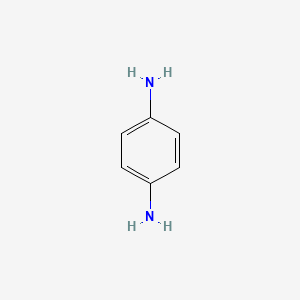
P-phenylenediamine appears as a white to purple crystalline solid (melting point 234 F) that turns purple to black in air. Flash point 309 F. Toxic by skin absorption, inhalation or ingestion. Used for production of aramid fiber, antioxidants, as a laboratory reagent, in photographic developing, and as a dye for hair and furs. 1,4-phenylenediamine is a phenylenediamine in which the amino functions are at positions 1 and 4 of the benzene nucleus. It has a role as a reagent, a dye, an allergen and a hapten. p-Phenylenediamine is primarily used as a dye intermediate and as a dye. Acute (short-term) exposure to high levels of p-phenylenediamine may cause severe dermatitis, eye irritation and tearing, asthma, gastritis, renal failure, vertigo, tremors, convulsions, and coma in humans. Eczematoid contact dermatitis may result from chronic (long-term) exposure in humans. In rats and mice chronically exposed to p- phenylenediamine in their diet, depressed body weights, but no other clinical signs of toxicity, were observed in several studies. No information is available on the reproductive, developmental, or carcinogenic effects of p-phenylenediamine in humans. EPA has not classified p-phenylenediamine with respect to carcinogenicity.
Source(s): CAMEO Chemicals, EPA Hazardous Air Pollutants, ChEBI, via PubChem