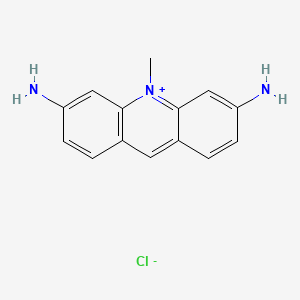
ACRIFLAVINIUM CHLORIDE
CAS 8018-07-3 · also known as Acriflavinium chloride, Acriflavine · other
Acriflavine is a topical antiseptic. It has the form of an orange or brown powder. It may be harmful in the eyes or if inhaled. It is a dye and it stains the skin and may irritate. The hydrochloride form is more irritating than the neutral form.
It is derived from acridine. Commercial preparations are often mixtures with proflavine. It is known by a variety of commercial names.
ACRIFLAVINIUM CHLORIDE is an other ingredient used in skincare formulations.
Quick facts
Description: ACRIFLAVINIUM CHLORIDE — Acriflavine is a topical antiseptic. It has the form of an orange or brown powder. It may be harmful in the eyes or if inhaled. It is a dye and it stains the skin and may irritate. The hydrochloride form is more irritating than the neutral form.
It is derived from acridine. Commercial preparations are often mixtures with proflavine. It is known by a variety of commercial names..
Quick Facts:
- Category: other
- Also Known As: Acriflavinium chloride, Acriflavine
Proven Benefits At A Glance:
- Acriflavinium chloride is an antimicrobial compound being studied for potential therapeutic use
- Research shows it can inhibit growth of H. pylori, a bacterium linked to stomach cancer and ulcers
- It appears effective against antibiotic-resistant strains in laboratory studies
- The mechanism may involve disrupting bacterial cell membranes
- Current research is limited to lab and animal studies; no human skincare data available
Chemical Overview
3,6-diamino-10-methylacridinium chloride is the 10-methochloride salt of 3,6-diaminoacridine. Note that a mixture of this compound with 3,6-diaminoacridine (proflavine) is known as acriflavine or neutral acriflavine. It has a role as an intercalator, an antibacterial agent, an antiseptic drug, a carcinogenic agent and a histological dye. It contains a 3,6-diamino-10-methylacridinium. See also: Methylene Blue (related); Cetylpyridinium Chloride (related); Chloramine-T (related) … View More …
Comedogenicity
Similar Ingredients

📰 More News
-
The CCL20-CCR6 axis predominantly drives IL-17-mediated psoriasis while modestly contributing to papain-induced type 2 inflammation
PubMed · 23 days ago
-
SkinCeuticals Just Reformulated Its C E Ferulic Serum
Allure · 14 days ago
-
Are Sunscreen Oils Just Tanning Oils in Disguise? Experts Weigh In
Allure · 14 days ago
-
Update to RIFM fragrance ingredient safety assessment, propenylguaethol, CAS Registry Number 94-86-0
PubMed · 14 days ago
-
Earth Harbor Obscura Night Repair Concentrate Review
Allure · 13 days ago
-
Okay, We’ll Bite: Fruity Perfumes Are Cool
Allure · 13 days ago