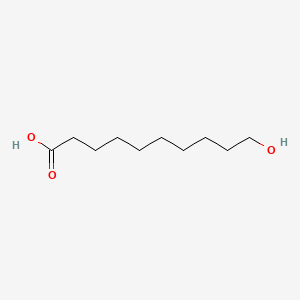
10-HYDROXYDECANOIC ACID
CAS 1679-53-4 · emollient · EC 216-848-1 · KR 10-하이드록시데카노익애씨드
10-Hydroxydecanoic acid
10-HYDROXYDECANOIC ACID is an emollient ingredient used in skincare formulations.
Quick facts
Description: 10-HYDROXYDECANOIC ACID — SKIN CONDITIONING.
All Functions: SKIN CONDITIONING
Quick Facts:
- Category: emollient
Proven Benefits At A Glance:
- 10-hydroxydecanoic acid (HDA) is a fatty acid compound studied for potential brain protection
- Research shows HDA may help counteract damage from heavy metal exposure combined with high-fat diets
- In animal studies, HDA reduced oxidative stress and inflammatory markers in brain tissue
- Current evidence comes from rat studies; human effects remain unknown
Chemical Overview
10-hydroxycapric acid is a 10-carbon, -hydroxy fatty acid, shown to be the preferred hydroxylation product (together with the 9-OH isomer) of capric acid in biosystems, and used as a standard in lipid assays; reported to have cytotoxic effects. It is an omega-hydroxy-medium-chain fatty acid and a straight-chain saturated fatty acid. It is functionally related to a decanoic acid. It is a conjugate acid of a 10-hydroxycaprate. The CIR Expert Panel concluded that the following ingredients are safe in the present practices of use and concentration described in the safety assessment when formulated to be non-irritating and non-sensitizing, which may be based on a QRA…10-Hydroxydecanoic Acid… has anti-inflammatory activity
Source(s): ChEBI, Medical Subject Headings (MeSH), Cosmetic Ingredient Review (CIR), via PubChem
Comedogenicity
Similar Ingredients

📰 More News
-
The CCL20-CCR6 axis predominantly drives IL-17-mediated psoriasis while modestly contributing to papain-induced type 2 inflammation
PubMed · Jul 11, 2026
-
SkinCeuticals Just Reformulated Its C E Ferulic Serum
Allure · Jul 20, 2026
-
Are Sunscreen Oils Just Tanning Oils in Disguise? Experts Weigh In
Allure · Jul 20, 2026
-
Update to RIFM fragrance ingredient safety assessment, propenylguaethol, CAS Registry Number 94-86-0
PubMed · Jul 20, 2026
-
Earth Harbor Obscura Night Repair Concentrate Review
Allure · Jul 21, 2026
-
Okay, We’ll Bite: Fruity Perfumes Are Cool
Allure · Jul 21, 2026