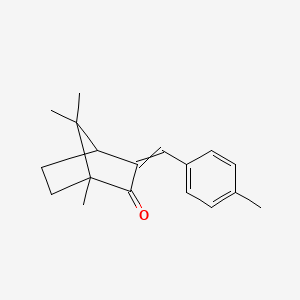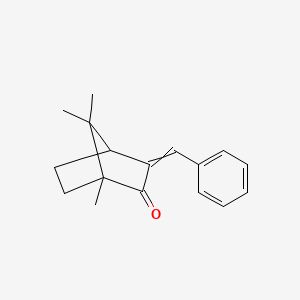
Description: 3-BENZYLIDENE CAMPHOR — UV ABSORBER.
All Functions: UV ABSORBER
Quick Facts:
- Category: sunscreen
- Regulatory Note: Prohibited in the EU
Proven Benefits At A Glance:
- 3-benzylidene camphor is a chemical UV filter used in sunscreens and cosmetics
- Research shows it can be absorbed through skin and accumulate in body tissues including fat, liver, brain, and plasma
- Studies indicate it may interact with hormone systems, specifically estrogen receptors
- Environmental concerns exist regarding potential effects on aquatic life
- The ingredient was not detected in human placental tissue in one study, though other UV filters were found
Safety tier is a starting heuristic from regulatory status and comedogenic rating, not a dermatological verdict — see our Terms for the full disclaimer. Research confidence reflects how many real cited studies back this ingredient, not the strength of their findings.
🧪 3-BENZYLIDENE CAMPHOR
3-BENZYLIDENE CAMPHOR
CAS Number: 15087-24-8
Also Known As: —
Category: sunscreen
EC Number: 239-139-9
Korean Name: 3-벤질리덴캠퍼
1,7,7-trimethyl-3-(phenylmethylene)bicyclo[2.2.1]heptan-2-one
3-BENZYLIDENE CAMPHOR is a sunscreen ingredient used in skincare formulations.
🌍 Regulatory Status
📊 Comedogenicity
📚 Research & Evidence
🔬 The Science
3-benzylidene camphor (3-BC) is a lipophilic (fat-soluble) chemical used to protect skin and materials from UV radiation. When applied topically, the ingredient absorbs through skin: a rat study found detectable concentrations in adipose tissue (up to 36 micrograms per gram), liver, brain, muscle, plasma, and testis after 65 days of exposure, suggesting similar absorption patterns may occur in humans (J Chromatogr B, 2006). #1: Hormone system interaction — Multiple studies show 3-benzylidene camphor can bind to estrogen receptors. In fish studies, it demonstrated potent estrogenic effects, causing a 105-fold increase in vitellogenin (a hormone marker) at higher doses, with measurable effects beginning at 6.4 mg/kg (Pharmacol Toxicol, 2002).
In mammalian cell and animal tests, 3-BC stimulated cell proliferation with an EC50 of 0.68 microM and showed unexpected potency in a rat uterotrophic assay, achieving about 70% of the effect of the synthetic estrogen ethinylestradiol (Toxicology, 2004). The ingredient binds selectively to estrogen receptor beta rather than alpha, which researchers noted makes it an interesting model compound but whose biological significance remains unclear. #2: Environmental concerns — As a UV filter increasingly found in aquatic systems, 3-benzylidene camphor poses potential risks to sensitive aquatic organisms. In acute toxicity tests on water fleas (Daphnia magna), it showed an LC50 of 0.56 mg/L at 48 hours, and when multiple UV filters occur together in surface waters, they may collectively pose a risk (Mar Environ Res, 2010).
#3: Detection in human tissues — While one study developed sensitive methods to detect 3-benzylidene camphor in human placental tissue (detection limit 0.4-0.6 ng/g), the compound was not actually found in the placental samples analyzed, though other UV filters were present (J Chromatogr B, 2013). The research remains limited in scope, and more data is needed to understand real-world human exposure and accumulation patterns.
💧 Skin Type Compatibility
⚠️ Don’t Combine With
🧴 Products Containing 3-BENZYLIDENE CAMPHOR
📄 Related Research
Matched by search — not necessarily verified support for every statement above.
- Fent K et al. (2010). A tentative environmental risk assessment of the UV-filters 3-(4-methylbenzylidene-camphor), 2-ethyl-hexyl-4-trimethoxycinnamate, benzophenone-3, benzophenone-4 and 3-benzylidene camphor. Mar Environ Res.
- Søeborg T et al. (2006). Distribution of the UV filter 3-benzylidene camphor in rat following topical application. J Chromatogr B Analyt Technol Biomed Life Sci.
- Holbech H et al. (2002). The chemical UV-filter 3-benzylidene camphor causes an oestrogenic effect in an in vivo fish assay. Pharmacol Toxicol.
- Schlumpf M et al. (2004). Estrogenic activity and estrogen receptor beta binding of the UV filter 3-benzylidene camphor. Comparison with 4-methylbenzylidene camphor. Toxicology.
- Jiménez-Díaz I et al. (2013). Simultaneous determination of the UV-filters benzyl salicylate, phenyl salicylate, octyl salicylate, homosalate, 3-(4-methylbenzylidene) camphor and 3-benzylidene camphor in human placental tissue by LC-MS/MS. Assessment of their in vitro endocrine activity. J Chromatogr B Analyt Technol Biomed Life Sci.
Similar Ingredients
📰 More News
-
Bakuchiol: From structural mimicry to systems-level skin biology
PubMed · Jun 2, 2026
-
Rosacea Skincare Including Moisturizers, Serums & Prescribed Creams
The Derm Review · Jun 4, 2026
-
The impact of avobenzone and oxybenzone on fibroblast and keratinocyte membranes. Searching for the role of lipids in the effect of UV filters on skin cells
PubMed · Jun 5, 2026
-
The Best Firming Tightening Anti Aging Body Lotions. For loss of firmness, crepey skin and wrinkles.
The Derm Review · Jun 12, 2026
-
14 of the Best Eczema Creams to Soothe Compromised Skin
The Derm Review · Jun 13, 2026
-
How To Get Rid of Age Spots, Dark Spots & Liver Spots on Hands, Arms, Legs, Body, Face
The Derm Review · Jun 13, 2026