
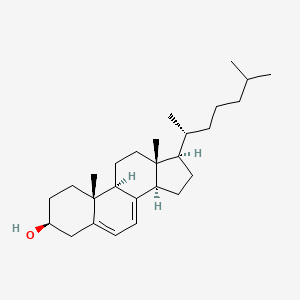
Description: 7-DEHYDROCHOLESTEROL — EMULSION STABILISING, SKIN CONDITIONING, VISCOSITY CONTROLLING.
All Functions: EMULSION STABILISING, SKIN CONDITIONING, VISCOSITY CONTROLLING
Quick Facts:
- Category: emollient
Proven Benefits At A Glance:
- 7-dehydrocholesterol (7-DHC) is a naturally occurring sterol present in human skin
- When skin is exposed to sunlight, 7-DHC converts to vitamin D3 to support immune function
- 7-DHC plays a crucial role in cholesterol production during fetal development
- In rare genetic conditions, abnormal 7-DHC levels can cause light sensitivity and skin issues
- Age does not significantly affect how much 7-DHC is available in skin for vitamin D production
Safety tier is a starting heuristic from regulatory status and comedogenic rating, not a dermatological verdict — see our Terms for the full disclaimer. Research confidence reflects how many real cited studies back this ingredient, not the strength of their findings.
🧪 7-DEHYDROCHOLESTEROL
7-DEHYDROCHOLESTEROL
CAS Number: 434-16-2
Also Known As: —
Category: emollient
EC Number: 207-100-5
Korean Name: 7-데하이드로콜레스테롤
Cholesta-5,7-dien-3(beta)-ol
7-DEHYDROCHOLESTEROL is an emollient ingredient used in skincare formulations.
🌍 Regulatory Status
📊 Comedogenicity
📚 Research & Evidence
🔬 The Science
7-dehydrocholesterol is a sterol—a type of fatty molecule—that exists naturally in your skin. Its primary known function relates to vitamin D synthesis: when ultraviolet radiation from sunlight hits your skin, 7-DHC is converted into vitamin D3, which then supports immune system function and maintains calcium balance in the body (Photochem Photobiol Sci, 2022; Nutrients, 2024). On a molecular level, 7-DHC is the final precursor in cholesterol biosynthesis (Biochim Biophys Acta, 2000). During normal development, an enzyme called 7-dehydrocholesterol reductase converts 7-DHC into cholesterol, which is essential for proper embryonic development and the formation of healthy skin, bones, and other tissues.
#1: Vitamin D production—The most well-established role is that 7-DHC serves as the raw material for vitamin D3 synthesis when exposed to UVB sunlight (Photochem Photobiol Sci, 2022; Nutrients, 2024). Research shows this process works similarly across age groups; baseline skin levels of 7-DHC do not significantly differ between younger and older adults, and both age groups show comparable vitamin D3 responses to sun exposure (Nutrients, 2024). #2: Developmental importance—In fetal development, cholesterol produced from 7-DHC is critical for normal morphogenesis and skeletal and skin formation (Biochim Biophys Acta, 2000). This is evident from rare genetic disorders where defects in 7-DHC metabolism cause congenital malformations and skin abnormalities.
#3: Light sensitivity in genetic disease—In the rare genetic condition Smith-Lemli-Opitz syndrome, where 7-DHC accumulates to abnormal levels due to enzyme deficiency, the excess 7-DHC activates nerve channels (TRPA1 and TRPV1) involved in pain and itch sensation, causing painful and itchy photosensitivity when exposed to light (Pain, 2017). This is a disease-specific effect tied to pathologically high 7-DHC levels, not normal skin levels. The sources provided focus on 7-DHC’s role in vitamin D production and its importance in development and rare diseases. Claims about benefits for cosmetic skincare applications are not supported by these research abstracts.
💧 Skin Type Compatibility
⚠️ Don’t Combine With
🧴 Products Containing 7-DEHYDROCHOLESTEROL
📄 Related Research
Matched by search — not necessarily verified support for every statement above.
- Waterham HR et al. (2000). Biochemical and genetic aspects of 7-dehydrocholesterol reductase and Smith-Lemli-Opitz syndrome. Biochim Biophys Acta.
- Babes A et al. (2017). Photosensitization of TRPA1 and TRPV1 by 7-dehydrocholesterol: implications for the Smith-Lemli-Opitz syndrome. Pain.
- Han Y et al. (2025). Advances in biosynthesis of 7-Dehydrocholesterol through de novo cell factory strategies. Bioresour Technol.
- Borecka O et al. (2024). Comparative Study of Healthy Older and Younger Adults Shows They Have the Same Skin Concentration of Vitamin D(3) Precursor, 7-Dehydrocholesterol, and Similar Response to UVR. Nutrients.
- Borecka O et al. (2022). A newly developed and validated LC-MS/MS method for measuring 7-dehydrocholesterol (7DHC) concentration in human skin: a tool for vitamin D photobiology research. Photochem Photobiol Sci.
Similar Ingredients

📰 More News
-
Bakuchiol: From structural mimicry to systems-level skin biology
PubMed · Jun 2, 2026
-
Rosacea Skincare Including Moisturizers, Serums & Prescribed Creams
The Derm Review · Jun 4, 2026
-
The impact of avobenzone and oxybenzone on fibroblast and keratinocyte membranes. Searching for the role of lipids in the effect of UV filters on skin cells
PubMed · Jun 5, 2026
-
The Best Firming Tightening Anti Aging Body Lotions. For loss of firmness, crepey skin and wrinkles.
The Derm Review · Jun 12, 2026
-
14 of the Best Eczema Creams to Soothe Compromised Skin
The Derm Review · Jun 13, 2026
-
How To Get Rid of Age Spots, Dark Spots & Liver Spots on Hands, Arms, Legs, Body, Face
The Derm Review · Jun 13, 2026