
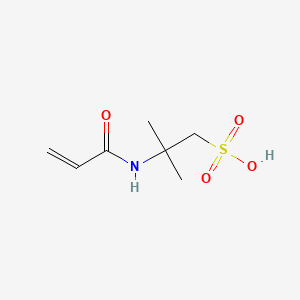
Description: 2-ACRYLAMIDO-2-METHYLPROPANE SULFONIC ACID — NOT REPORTED.
All Functions: NOT REPORTED
Quick Facts:
- Category: other
Proven Benefits At A Glance:
- 2-acrylamido-2-methylpropanesulfonic acid (AMPS) is a synthetic polymer ingredient that can be formed into hydrogels
- AMPS hydrogels can be modified with tannic acid to alter their physical properties
- The ingredient has been studied in laboratory settings for hydrogel formulation, not yet established in consumer skincare products
- Research to date focuses on material science properties like strength and flexibility, not skincare efficacy
Safety tier is a starting heuristic from regulatory status and comedogenic rating, not a dermatological verdict — see our Terms for the full disclaimer. Research confidence reflects how many real cited studies back this ingredient, not the strength of their findings.
🧪 2-ACRYLAMIDO-2-METHYLPROPANE SULFONIC ACID
2-ACRYLAMIDO-2-METHYLPROPANE SULFONIC ACID
CAS Number: 15214-89-8
Also Known As: —
Category: other
EC Number: 239-268-0
Korean Name: 2-아크릴아미도-2-메틸프로판설포닉애씨드
AMPS,tert-Butylacrylamidosulfonic acid,1-Propanesulfonic acid, 2-Methyl-2-[(1-oxo-2-propen-1-yl)amino]-
2-ACRYLAMIDO-2-METHYLPROPANE SULFONIC ACID is an other ingredient used in skincare formulations.
🌍 Regulatory Status
📊 Comedogenicity
📚 Research & Evidence
🔬 The Science
2-acrylamido-2-methylpropanesulfonic acid (AMPS) is a synthetic compound used to create hydrogels—polymer networks that absorb and hold water. According to research published in Polymers (Basel) in 2023, AMPS hydrogels can be manufactured using electron beam technology and modified with natural additives like tannic acid (a plant-derived compound) to change their properties. When tannic acid is added to AMPS hydrogels in small amounts, several material properties shift: #1: peel strength—a measure of how strongly the hydrogel adheres to a surface—increased substantially, with tannic acid boosting adhesion by over 300% in some cases (Polymers Basel, 2023); #2: the hydrogel becomes more flexible, with tensile elongation exceeding 2000% when tannic acid is incorporated (Polymers Basel, 2023); #3: ionic conductivity increases from 0.9 S/m to 1.52 S/m with tannic acid addition, meaning the hydrogel becomes better at conducting charged particles (Polymers Basel, 2023); #4: the hydrogel’s water-swelling capacity decreases by about 50% when tannic acid is added (Polymers Basel, 2023).
It is important to note that the available research is limited to laboratory material science studies. No human skin studies, safety assessments, or skincare efficacy data were included in these abstracts. The research examines how AMPS performs as an industrial polymer, not how it functions in consumer skincare products or what benefits it may provide to skin.
💧 Skin Type Compatibility
⚠️ Don’t Combine With
🧴 Products Containing 2-ACRYLAMIDO-2-METHYLPROPANE SULFONIC ACID
📄 Related Research
Matched by search — not necessarily verified support for every statement above.
Similar Ingredients
📰 More News
-
Bakuchiol: From structural mimicry to systems-level skin biology
PubMed · Jun 2, 2026
-
Rosacea Skincare Including Moisturizers, Serums & Prescribed Creams
The Derm Review · Jun 4, 2026
-
The impact of avobenzone and oxybenzone on fibroblast and keratinocyte membranes. Searching for the role of lipids in the effect of UV filters on skin cells
PubMed · Jun 5, 2026
-
The Best Firming Tightening Anti Aging Body Lotions. For loss of firmness, crepey skin and wrinkles.
The Derm Review · Jun 12, 2026
-
14 of the Best Eczema Creams to Soothe Compromised Skin
The Derm Review · Jun 13, 2026
-
How To Get Rid of Age Spots, Dark Spots & Liver Spots on Hands, Arms, Legs, Body, Face
The Derm Review · Jun 13, 2026