Mia Seilern
ACETYL HEXAPEPTIDE-8
⚠️ Data is provided for informational purposes only. It may contain inaccuracies and should be independently verified. This is not medical advice. Consult a healthcare professional before making health decisions.

Description: ACETYL HEXAPEPTIDE-8 — peptide — reduces appearance of expression lines, topical Botox-like effect (Argireline).

All Functions: peptide — reduces appearance of expression lines, topical Botox-like effect (Argireline)

Quick Facts:

  • Category: active

Proven Benefits At A Glance:

  • Acetyl hexapeptide-8 (also called Argireline) is a synthetic peptide designed to mimic natural skin peptides
  • It’s marketed as a topical, non-injectable alternative to botulinum toxin treatments
  • Research suggests it may reduce wrinkle depth, improve skin elasticity, and increase skin hydration
  • It faces a major challenge: its large molecular size makes it difficult to penetrate deep into skin
  • Clinical studies show promise, but exactly how it works on skin remains incompletely understood
Safety: Generally Low ConcernResearch confidence: Good

Safety tier is a starting heuristic from regulatory status and comedogenic rating, not a dermatological verdict — see our Terms for the full disclaimer. Research confidence reflects how many real cited studies back this ingredient, not the strength of their findings.

Pregnancy safe

🤰 Pregnancy Safety Note

Topical bioavailability is low; no documented systemic exposure at cosmetic doses.

🧪 ACETYL HEXAPEPTIDE-8

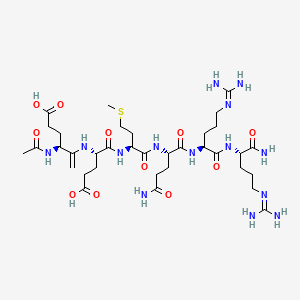
Chemical structure of ACETYL HEXAPEPTIDE-8

ACETYL HEXAPEPTIDE-8

CAS Number: 616204-22-9

Also Known As:

Category: active

EC Number:

Korean Name: 아세틸헥사펩타이드-8

Acetyl hexapeptide-8 is the synthetic peptide consisting of arginine, methionine, and acetylated glutamic acid residues

ACETYL HEXAPEPTIDE-8 is an active ingredient used in skincare formulations.

peptide — reduces appearance of expression linestopical Botox-like effect (Argireline)

🌍 Regulatory Status

EU: No restriction on fileUS: No restriction on file

📊 Comedogenicity

No data yet
Not rated for this ingredient yet.

📚 Research & Evidence

PUBMED CITATIONS
3
Data sources: EU CosIng PubMed

🔬 The Science

Acetyl hexapeptide-8 belongs to a category of cosmetic ingredients called biomimetic peptides—molecules engineered to copy the behavior of peptides your body naturally produces for skin repair and health (Int J Mol Sci, 2025). The ingredient earned the nickname “botox-like peptide” because it’s theorized to work by modulating neuromuscular activity, potentially reducing wrinkles in a similar way to injectable botulinum toxin, but through a topical application instead (Int J Mol Sci, 2025). #1: Research indicates acetyl hexapeptide-8 may reduce wrinkle depth, improve skin elasticity, and enhance skin hydration (Int J Mol Sci, 2025). In a clinical trial published in 2019, when acetyl hexapeptide-8 was delivered via a microneedle patch (a delivery method that creates tiny channels in skin), it showed statistically significant improvements in wrinkles compared to the patch alone, with results measured on day 29 of treatment (Ann Dermatol, 2019).

#2: The ingredient has also demonstrated potential benefits in scar remodeling and sebum regulation in some studies, though these applications are less established (Int J Mol Sci, 2025). However, there’s a significant limitation: because acetyl hexapeptide-8 is hydrophilic (water-loving) and relatively large as molecules go, it struggles to penetrate the skin’s outer barrier, called the stratum corneum, which is naturally oily (lipophilic) (Int J Mol Sci, 2025). This poor skin penetration raises an important uncertainty—whether the peptide can actually reach the neuromuscular junctions where it would theoretically inhibit muscle contractions (Int J Mol Sci, 2025). Scientists are exploring formulation strategies like oil-in-water and water-in-oil-in-water emulsions to improve delivery, but the precise biological mechanisms behind the observed wrinkle improvements remain incompletely understood (Int J Mol Sci, 2025).

Growing consumer interest in acetyl hexapeptide-8 reflects its appeal as an affordable, over-the-counter alternative to injectable treatments that requires no professional application (JMIR Dermatol, 2024).

💧 Skin Type Compatibility

100%
Sensitive
100%
Oily
100%
Dry
100%
Combination
100%
Acne-prone
100%
Normal

Derived from this ingredient’s irritancy potential and comedogenicity rating against the needs of each skin type — e.g. oily and acne-prone skin are marked down for pore-clogging ingredients, sensitive skin for irritants. A starting heuristic, not a dermatological verdict.

⚠️ Don’t Combine With

No data yet
No known incompatibilities on file for this ingredient.

🧴 Products Containing ACETYL HEXAPEPTIDE-8

📄 Related Research

Matched by search — not necessarily verified support for every statement above.

Similar Ingredients

(CINNAMOMUM CASSIA/MAGNOLIA OFFICINALIS) BARK/(ALPINIA OFFICINARUM/ANGELICA GIGAS) ROOT EXTRACT
active
View
3-GLYCERYL ASCORBATE
active
View
3-LAURYLGLYCERYL ASCORBATE
active
View
4-BUTYLRESORCINOL
4-BUTYLRESORCINOL
active
View
4-ISOBUTYLRESORCINOL
active
View
ABIES ALBA SEED EXTRACT
active
View
ABIES ALBA SEED OIL
ABIES ALBA SEED OIL
active
View
ACACIA CATECHU CATECHINS
active
View