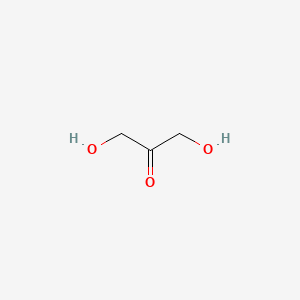
DIHYDROXYACETONE
CAS 96-26-4 · active · EC 202-494-5 · KR 다이하이드록시아세톤
1,3-Dihydroxyacetone
DIHYDROXYACETONE is an active ingredient used in skincare formulations.
Quick facts
Description: DIHYDROXYACETONE — self-tanning agent — reacts with surface skin proteins to temporarily darken skin.
All Functions: self-tanning agent — reacts with surface skin proteins to temporarily darken skin
Quick Facts:
- Category: active
- Regulatory Note: Restricted in the EU
Proven Benefits At A Glance:
- DHA is a 3-carbon sugar approved by the FDA as a color additive in sunless tanning products
- It works by reacting with proteins in your skin to create a brown color, not by protecting from sun damage
- DHA offers minimal to no protection against UV radiation—it’s purely cosmetic
- The FDA recommends avoiding contact with eyes, lips, and mucous membranes, and warns against ingestion or inhalation
- Contact dermatitis (skin irritation and allergic reactions) has been reported with DHA
- At low concentrations used in consumer products, DHA doesn’t kill skin cells but does trigger cellular stress responses
Chemical Overview
Dihydroxyacetone is a ketotriose consisting of acetone bearing hydroxy substituents at positions 1 and 3. The simplest member of the class of ketoses and the parent of the class of glycerones. It has a role as a metabolite, an antifungal agent, a mouse metabolite, a Saccharomyces cerevisiae metabolite, an Escherichia coli metabolite and a human metabolite. It is a primary alpha-hydroxy ketone and a ketotriose. Dihydroxyacetone is a metabolite found in or produced by Escherichia coli (strain K12, MG1655). dihydroxyacetone has been reported in Arabidopsis thaliana, Homo sapiens, and other organisms with data available.
Source(s): ChEBI, E. coli Metabolome Database (ECMDB), LOTUS – the natural products occurrence database, via PubChem
Comedogenicity
Similar Ingredients

📰 More News
-
The CCL20-CCR6 axis predominantly drives IL-17-mediated psoriasis while modestly contributing to papain-induced type 2 inflammation
PubMed · Jul 11, 2026
-
SkinCeuticals Just Reformulated Its C E Ferulic Serum
Allure · Jul 20, 2026
-
Are Sunscreen Oils Just Tanning Oils in Disguise? Experts Weigh In
Allure · Jul 20, 2026
-
Update to RIFM fragrance ingredient safety assessment, propenylguaethol, CAS Registry Number 94-86-0
PubMed · Jul 20, 2026
-
Earth Harbor Obscura Night Repair Concentrate Review
Allure · Jul 21, 2026
-
Okay, We’ll Bite: Fruity Perfumes Are Cool
Allure · Jul 21, 2026