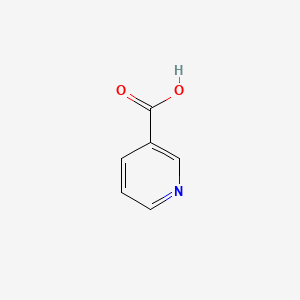
NIACIN
CAS 59-67-6 · active · EC 200-441-0 · KR 나이아신
3-Pyridinecarboxylic acid
NIACIN is an active ingredient used in skincare formulations.
Quick facts
Description: NIACIN — vitamin B3 precursor form, circulation support (distinct from Niacinamide).
All Functions: vitamin B3 precursor form, circulation support (distinct from Niacinamide)
Quick Facts:
- Category: active
Proven Benefits At A Glance:
- Niacin and niacinamide are two forms of vitamin B3 used in skincare products
- Niacinamide is found in around 30 cosmetic formulations at concentrations ranging from 0.0001% to 3%
- Both ingredients are considered safe for use in cosmetics at current concentration levels
- Niacinamide is not a skin irritant, sensitizer, or photosensitizer in clinical testing
- Niacin deficiency (pellagra) is rare in industrialized nations but can occur with chronic alcoholism or malabsorption
Chemical Overview
Nicotinate is a pyridinemonocarboxylate that is the conjugate base of nicotinic acid, arising from deprotonation of the carboxy group; major species at pH 7.3. It has a role as a metabolite and a Saccharomyces cerevisiae metabolite. It is a vitamin B3 and a pyridinemonocarboxylate. It is a conjugate base of a nicotinic acid. Nicotinic acid, also known as niacin or vitamin B3, is a water-soluble vitamin whose derivatives such as NADH, NAD, NAD+, and NADP play essential roles in energy metabolism in the living cell and DNA repair. The designation vitamin B3 also includes the amide form, nicotinamide or niacinamide. Severe lack of niacin causes the deficiency disease pellagra, whereas a mild deficiency slows down the metabolism decreasing cold tolerance. The recommended daily allowance of niacin is 2-12 mg a day for children, 14 mg a day for women, 16 mg a day for men, and 18 mg a day for pregnant or breast-feeding women. It is found in various animal and plant tissues and has pellagra-curative, vasodilating, and antilipemic properties. The liver can synthesize niacin from the essential amino acid tryptophan (see below), but the synthesis is extremely slow and requires vitamin B6; 60 mg of tryptophan are required to make one milligram of niacin. Bacteria in the gut may also perform the conversion but are inefficient.
Source(s): ChEBI, Toxin and Toxin Target Database (T3DB), via PubChem
Comedogenicity
Similar Ingredients

📰 More News
-
The CCL20-CCR6 axis predominantly drives IL-17-mediated psoriasis while modestly contributing to papain-induced type 2 inflammation
PubMed · Jul 11, 2026
-
SkinCeuticals Just Reformulated Its C E Ferulic Serum
Allure · Jul 20, 2026
-
Are Sunscreen Oils Just Tanning Oils in Disguise? Experts Weigh In
Allure · Jul 20, 2026
-
Update to RIFM fragrance ingredient safety assessment, propenylguaethol, CAS Registry Number 94-86-0
PubMed · Jul 20, 2026
-
Earth Harbor Obscura Night Repair Concentrate Review
Allure · Jul 21, 2026
-
Okay, We’ll Bite: Fruity Perfumes Are Cool
Allure · Jul 21, 2026