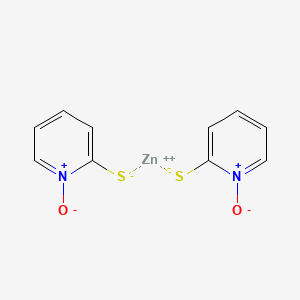
PYRITHIONE ZINC
CAS 13463-41-7 · also known as Zinc pyrithione · other
PYRITHIONE ZINC. Formula: C10H8N2O2S2Zn. MW: 317.7. IUPAC: zinc bis(1-oxidopyridin-1-ium-2-thiolate)
PYRITHIONE ZINC is an other ingredient used in skincare formulations.
Quick facts
Description: PYRITHIONE ZINC — PYRITHIONE ZINC. Formula: C10H8N2O2S2Zn. MW: 317.7. IUPAC: zinc bis(1-oxidopyridin-1-ium-2-thiolate).
Quick Facts:
- Category: other
- Also Known As: Zinc pyrithione
- Regulatory Note: Restricted in the US
Proven Benefits At A Glance:
- Pyrithione zinc is an antifungal and antibacterial ingredient used in dandruff and seborrheic dermatitis shampoos
- A 1% pyrithione zinc shampoo showed modest but sustained improvements in hair count over 26 weeks when used daily
- The hair growth benefit of pyrithione zinc was about half that of minoxidil (a well-established hair loss treatment)
- Studies found no evidence that pyrithione zinc’s dandruff-fighting benefits weaken over time with continued use
- Combining pyrithione zinc shampoo with minoxidil showed no additional benefit compared to minoxidil alone
Chemical Overview
Zinc pyrithione is a fine beige granules. (NTP, 1992) Pyrithione Zinc is a coordination complex of the zinc ion and pyrithione, a derivative of the naturally occurring antibiotic aspergillic acid with antimicrobial, antifungal and anti-seborrheic effects. Although the exact mechanism of action remains to be fully elucidated, pyrithione zinc appears to interfere with the membrane transport of ions and metabolites, ultimately leading to a loss of metabolic control. In addition, this agent causes an influx of copper, leading to a reduction in the activity of iron-sulphur proteins resulting in growth inhibition. Zinc pyrithione is a chemical compound of zinc. It is used as an antifungal and antibacterial agent. Zinc is a metallic element with the atomic number 30. It is found in nature most often as the mineral sphalerite. Though excess zinc in harmful, in smaller amounts it is an essential element for life, as it is a cofactor for over 300 enzymes and is found in just as many transcription factors. (L48, L49, L76)
Source(s): NCI Thesaurus (NCIt), Toxin and Toxin Target Database (T3DB), CAMEO Chemicals, via PubChem
Comedogenicity
Similar Ingredients

📰 More News
-
The CCL20-CCR6 axis predominantly drives IL-17-mediated psoriasis while modestly contributing to papain-induced type 2 inflammation
PubMed · Jul 11, 2026
-
SkinCeuticals Just Reformulated Its C E Ferulic Serum
Allure · Jul 20, 2026
-
Are Sunscreen Oils Just Tanning Oils in Disguise? Experts Weigh In
Allure · Jul 20, 2026
-
Update to RIFM fragrance ingredient safety assessment, propenylguaethol, CAS Registry Number 94-86-0
PubMed · Jul 20, 2026
-
Earth Harbor Obscura Night Repair Concentrate Review
Allure · Jul 21, 2026
-
Okay, We’ll Bite: Fruity Perfumes Are Cool
Allure · Jul 21, 2026