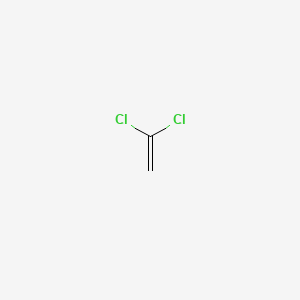
VINYLIDENE CHLORIDE
CAS 75-35-4 · also known as Vinylidene chloride, 1,1-Dichloroethylene · other
VINYLIDENE CHLORIDE. Formula: C2H2Cl2. MW: 96.94. IUPAC: 1,1-dichloroethene
VINYLIDENE CHLORIDE is an other ingredient used in skincare formulations.
Quick facts
Description: VINYLIDENE CHLORIDE — VINYLIDENE CHLORIDE. Formula: C2H2Cl2. MW: 96.94. IUPAC: 1,1-dichloroethene.
Quick Facts:
- Category: other
- Also Known As: Vinylidene chloride, 1,1-Dichloroethylene
Proven Benefits At A Glance:
- Vinylidene chloride is an industrial chemical used to make plastics and coatings, not a skincare ingredient
- It is not documented in these sources as being used in skincare products
- Human exposure typically occurs through occupational inhalation, dermal contact, or contaminated drinking water—not cosmetic application
- The available research focuses on toxicology and industrial safety, not skincare benefits
Chemical Overview
1, 1-Dichloroethene is an industrial chemical that is not found naturally in the environment. It is a colorless liquid with a mild, sweet smell. It is also called vinylidene chloride. 1, 1-Dichloroethene is used to make certain plastics, such as flexible films like food wrap, and in packaging materials. It is also used to make flame retardant coatings for fiber and carpet backings, and in piping, coating for steel pipes, and in adhesive applications. Vinylidene Chloride (1,1-Dichloroethylene) can cause cancer according to California Labor Code. Vinylidene chloride, stabilized appears as a clear colorless liquid with a chloroform-like odor. Flash point 0 °F. Boiling point 99 °F. Denser (at 10.1 lb / gal) than water and insoluble in water. Hence sinks in water. May polymerize exothermically if heated or contaminated. If the polymerization takes place inside a container, the container may rupture violently. Vapors heavier than air.
Source(s): Agency for Toxic Substances and Disease Registry (ATSDR), California Office of Environmental Health Hazard Assessment (OEHHA), CAMEO Chemicals, via PubChem
Comedogenicity
Similar Ingredients

📰 More News
-
The CCL20-CCR6 axis predominantly drives IL-17-mediated psoriasis while modestly contributing to papain-induced type 2 inflammation
PubMed · Jul 11, 2026
-
SkinCeuticals Just Reformulated Its C E Ferulic Serum
Allure · Jul 20, 2026
-
Are Sunscreen Oils Just Tanning Oils in Disguise? Experts Weigh In
Allure · Jul 20, 2026
-
Update to RIFM fragrance ingredient safety assessment, propenylguaethol, CAS Registry Number 94-86-0
PubMed · Jul 20, 2026
-
Earth Harbor Obscura Night Repair Concentrate Review
Allure · Jul 21, 2026
-
Okay, We’ll Bite: Fruity Perfumes Are Cool
Allure · Jul 21, 2026