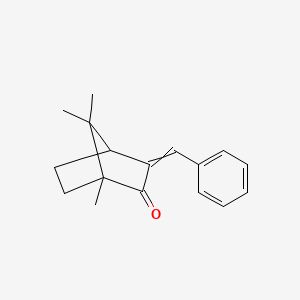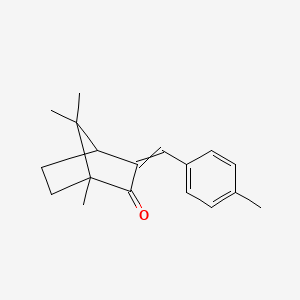
Description: 4-METHYLBENZYLIDENE CAMPHOR β LIGHT STABILIZER, UV ABSORBER, UV FILTER.
All Functions: LIGHT STABILIZER, UV ABSORBER, UV FILTER
Quick Facts:
- Category: sunscreen
- Regulatory Note: Prohibited in the EU
Proven Benefits At A Glance:
- 4-MBC is a UV filter used in cosmetics to protect skin from UV rays
- It can be absorbed into the body and detected in urine as metabolites
- Research shows it interacts with estrogen receptors in the body
- Use of 4-MBC in cosmetics has declined significantly since the early 2000s in Germany
- Scientists are studying potential effects on the brain, liver, and reproductive system
Safety tier is a starting heuristic from regulatory status and comedogenic rating, not a dermatological verdict β see our Terms for the full disclaimer. Research confidence reflects how many real cited studies back this ingredient, not the strength of their findings.
π§ͺ 4-METHYLBENZYLIDENE CAMPHOR
4-METHYLBENZYLIDENE CAMPHOR
CAS Number: 36861-47-9 / 38102-62-4
Also Known As: β
Category: sunscreen
EC Number: 253-242-6 /
Korean Name: 4-λ©μΉ λ²€μ§λ¦¬λ΄μΊ νΌ
(.+-.)-1,7,7-trimethyl-3-[(4-methylphenyl)methylene]bicyclo[2.2.1]heptan-2-one
4-METHYLBENZYLIDENE CAMPHOR is a sunscreen ingredient used in skincare formulations.
π Regulatory Status
π Comedogenicity
π Research & Evidence
π¬ The Science
4-Methylbenzylidene camphor (4-MBC) is a photo-absorbing ultraviolet (UV) filter β meaning it absorbs UV energy to protect skin from sun damage β that has been widely incorporated into cosmetic products. Beyond its intended use on skin, #1: research shows 4-MBC can be absorbed into circulation and cause systemic effects throughout the body (Basic Clin Pharmacol Toxicol, 2023). When you use products containing 4-MBC, your body breaks it down into metabolites (smaller molecules created during metabolism). #2: Studies of German adults found these metabolites in urine samples, and tracking over time showed that 4-MBC exposure from cosmetics peaked in the 1990s-early 2000s, with detection rates dropping from 70% of samples in 1995 to 0% by 2019 (Environ Res, 2023).
This decline reflects reduced use by the cosmetics industry. The primary scientific concern centers on 4-MBC’s interaction with hormone systems. #3: Laboratory research in zebrafish found that 4-MBC produces estrogenic effects β meaning it acts similarly to the hormone estrogen in the body β by interacting with estrogen receptors, particularly estrogen receptor alpha (Environ Pollut, 2023). #4: A comprehensive review notes that 4-MBC can also interact with estrogen receptor beta and progesterone receptor, and may bioaccumulate in the body over time (Basic Clin Pharmacol Toxicol, 2023). Beyond hormone receptors, research has identified other molecular pathways affected by 4-MBC. #5: Studies show it activates inflammatory signaling pathways (p38 MAPK and NF-ΞΊB) that can increase production of inflammatory molecules, and it has been found to trigger cell death and inhibit DNA repair in laboratory models (Basic Clin Pharmacol Toxicol, 2023).
The sources acknowledge significant limitations: most evidence comes from laboratory studies in zebrafish or cell cultures rather than human trials, and the practical health significance of these findings for consumers using cosmetic products remains unclear. The highest exposure level measured in German urine samples was still over 30 times below the established health-based guidance value (Environ Res, 2023), though one review emphasizes that 4-MBC can cause effects “even at low doses” (Basic Clin Pharmacol Toxicol, 2023). The research is ongoing and evolving.
π§ Skin Type Compatibility
β οΈ Don’t Combine With
π§΄ Products Containing 4-METHYLBENZYLIDENE CAMPHOR
π Related Research
Matched by search β not necessarily verified support for every statement above.
- Xian H et al. (2023). 4-Methylbenzylidene camphor triggers estrogenic effects via the brain-liver-gonad axis in zebrafish larvae. Environ Pollut.
- Schmidtkunz C et al. (2023). A time trend of urinary 4-methylbenzylidene camphor metabolites in young adults from Germany. Environ Res.
- Lax C et al. (2023). The effect of sunscreen 4-methylbenzylidene camphor in different and reproductive models, its bioaccumulation and molecular effects on ligand-receptor interaction, and protein expression. Basic Clin Pharmacol Toxicol.
- Centini M et al. (2015). Improving photoprotection: 4-methylbenzylidene camphor microspheres. Pharm Dev Technol.
Similar Ingredients
π° More News
-
Bakuchiol: From structural mimicry to systems-level skin biology
PubMed Β· Jun 2, 2026
-
Rosacea Skincare Including Moisturizers, Serums & Prescribed Creams
The Derm Review Β· Jun 4, 2026
-
The impact of avobenzone and oxybenzone on fibroblast and keratinocyte membranes. Searching for the role of lipids in the effect of UV filters on skin cells
PubMed Β· Jun 5, 2026
-
The Best Firming Tightening Anti Aging Body Lotions. For loss of firmness, crepey skin and wrinkles.
The Derm Review Β· Jun 12, 2026
-
14 of the Best Eczema Creams to Soothe Compromised Skin
The Derm Review Β· Jun 13, 2026
-
How To Get Rid of Age Spots, Dark Spots & Liver Spots on Hands, Arms, Legs, Body, Face
The Derm Review Β· Jun 13, 2026