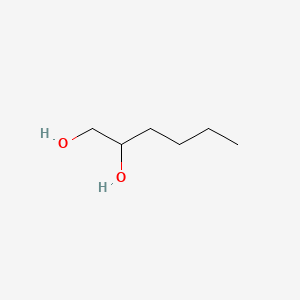
1,2-HEXANEDIOL
⚠️ Data is provided for informational purposes only. It may contain inaccuracies and should be independently verified. This is not medical advice. Consult a healthcare professional before making health decisions.

Description: 1,2-HEXANEDIOL — SKIN CONDITIONING, SOLVENT.

All Functions: SKIN CONDITIONING, SOLVENT

Quick Facts:

  • Category: emollient

Proven Benefits At A Glance:

  • A preservative and moisturizing ingredient commonly used in cosmetics as a paraben alternative
  • Works against both bacteria and fungi, with effectiveness that can be boosted when combined with other ingredients
  • Can be formulated to reduce skin penetration of certain active ingredients while keeping them active in the skin layers
  • Showed no allergic sensitization reactions in a 200-person patch test study
  • Limited safety data exists; one study raised concerns about toxicity at concentrations above 1% in cell and plant models
Safety: Generally Low ConcernResearch confidence: Good

Safety tier is a starting heuristic from regulatory status and comedogenic rating, not a dermatological verdict — see our Terms for the full disclaimer. Research confidence reflects how many real cited studies back this ingredient, not the strength of their findings.

🧪 1,2-HEXANEDIOL

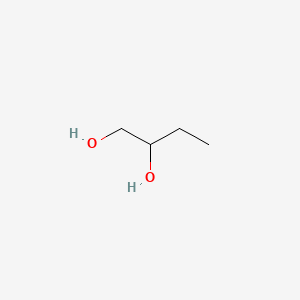
Chemical structure of 1,2-HEXANEDIOL

1,2-HEXANEDIOL

CAS Number: 6920-22-5

Also Known As:

Category: emollient

EC Number: 230-029-6

Korean Name: 1,2-헥산다이올

1,2-HEXANEDIOL is an emollient ingredient used in skincare formulations.

SKIN CONDITIONINGSOLVENT

🌍 Regulatory Status

EU: No restriction on fileUS: No restriction on file

📊 Comedogenicity

No data yet
Not rated for this ingredient yet.

📚 Research & Evidence

PUBMED CITATIONS
5
Data sources: EU CosIng PubMed

🔬 The Science

1,2-hexanediol is a multifunctional ingredient in modern skincare formulations, serving primarily as a preservative to replace parabens, which many consumers now avoid (J Microorg Control, 2024). Here’s what the research shows about how it works:

#1: Antimicrobial action—1,2-hexanediol exhibits broad-spectrum activity against both gram-positive and gram-negative bacteria at concentrations between 0.5–2% (v/v), meaning it can kill or slow growth of a wide range of microorganisms that would otherwise spoil products (Lett Appl Microbiol, 2015). The mechanism involves disrupting the cell membrane of bacteria, destabilizing their protective barrier (Lett Appl Microbiol, 2015). #2: Synergistic preservation—the ingredient becomes more effective when combined with other cosmetic ingredients.

Niacinamide (a form of vitamin B3) showed synergistic antifungal activity with 1,2-hexanediol, allowing formulators to use less of it while maintaining preservation (J Microorg Control, 2024). Similarly, when paired with food-grade antimicrobial compounds like octyl gallate or macelignan, its antimicrobial potency increased significantly (Lett Appl Microbiol, 2015). #3: Modulation of skin penetration—in topical formulations, 1,2-hexanediol can slow the absorption of active ingredients through the skin barrier, which may reduce systemic exposure while maintaining therapeutic levels in the outer skin layers (Int J Pharm, 2011). This could be beneficial for minimizing side effects from certain actives. #4: Safety profile in patch testing—a 200-person repeat insult patch test found no delayed allergic hypersensitivity reactions when 1,2-hexanediol was used at 15% concentration in a mixture with caprylyl glycol (Cutan Ocul Toxicol, 2009).

However, important limitations exist: #5: Toxicity concerns at higher concentrations—one 2020 study raised red flags, finding that 1,2-hexanediol at 1% and above reduced cell viability in laboratory models and inhibited plant growth at even 0.1% concentrations (Ecotoxicol Environ Saf, 2020). The authors noted that most personal care products contain more than 2% 1,2-hexanediol and called for further investigation into human safety, though they tested in controlled lab settings rather than on intact skin. The sources provided do not contain sufficient data to definitively resolve this concern or establish safe usage limits for consumer products.

💧 Skin Type Compatibility

No data yet
Per-skin-type data isn’t curated for this ingredient yet.

⚠️ Don’t Combine With

No data yet
No known incompatibilities on file for this ingredient.

🧴 Products Containing 1,2-HEXANEDIOL

📄 Related Research

Matched by search — not necessarily verified support for every statement above.

Similar Ingredients

(20S)-PROTOPANAXADIOL
emollient
View
(ANGELICA ACUTILOBA/PAEONIA LACTIFLORA) ROOT/CNIDIUM OFFICINALE RHIZOME EXTRACT
emollient
View
(CINNAMOMUM CASSIA/MAGNOLIA OFFICINALIS) BARK/(ALPINIA OFFICINARUM/ANGELICA GIGAS) ROOT EXTRACT
active
View
(MORUS ALBA FRUIT/SUCROSE FERMENT FILTRATE) POLYGONUM MULTIFLORUM ROOT EXTRACT FERMENT FILTRATE
humectant
View
Update cookies preferences