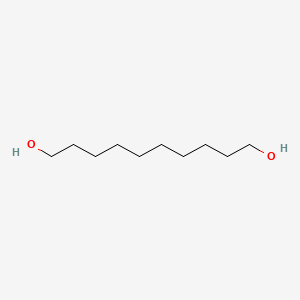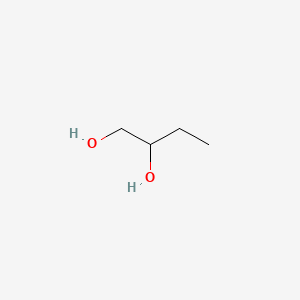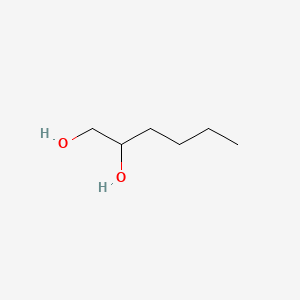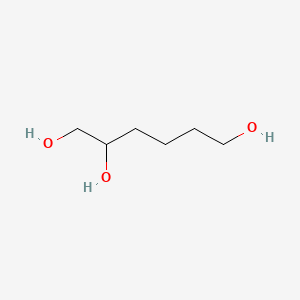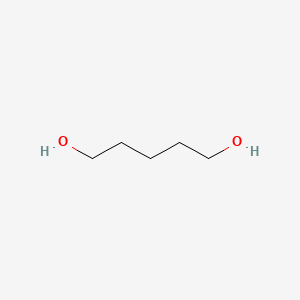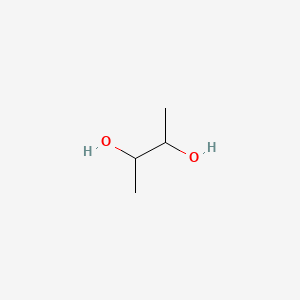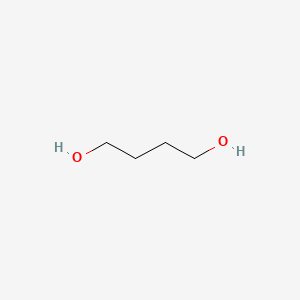
Description: 1,4-BUTANEDIOL — SOLVENT.
All Functions: SOLVENT
Quick Facts:
- Category: other
Proven Benefits At A Glance:
- 1,4-butanediol diglycidyl ether (BDDE) is primarily used as a cross-linker in hyaluronic acid dermal fillers, not as a standalone skincare ingredient
- When BDDE reacts with hyaluronic acid during filler manufacturing, unreacted BDDE levels are reduced to trace amounts (less than 2 parts per million)
- Safety data spanning over 15 years supports the favorable safety profile of BDDE-crosslinked hyaluronic acid fillers and their breakdown products
- Manufacturers are developing hyaluronic acid fillers with reduced BDDE content due to potential cytotoxic and mutagenic concerns
- Clinical studies show mild adverse events with reduced-BDDE hyaluronic acid fillers used for lip augmentation
Safety tier is a starting heuristic from regulatory status and comedogenic rating, not a dermatological verdict — see our Terms for the full disclaimer. Research confidence reflects how many real cited studies back this ingredient, not the strength of their findings.
🧪 1,4-BUTANEDIOL
1,4-BUTANEDIOL
CAS Number: 110-63-4
Also Known As: —
Category: other
EC Number: 203-786-5
Korean Name: 1,4-부탄다이올
Butane – 1,4 – diol
1,4-BUTANEDIOL is an other ingredient used in skincare formulations.
🌍 Regulatory Status
📊 Comedogenicity
📚 Research & Evidence
🔬 The Science
1,4-butanediol diglycidyl ether (often abbreviated as BDDE or BDDGE) is a chemical compound used primarily in cosmetic dermatology, but not as a direct skincare ingredient you’d apply to your face. Instead, it functions as a cross-linker—think of it as a molecular ‘glue’ that holds hyaluronic acid molecules together in dermal fillers (injectable products used to add volume to lips and reduce wrinkles). #1: How it works in fillers: When BDDE chemically reacts with hyaluronic acid during filler manufacturing, the reactive parts of BDDE (called epoxide groups) become neutralized, leaving only trace amounts of unreacted BDDE in the final product—specifically less than 2 parts per million (Dermatol Surg, 2013).
This means the finished filler contains almost no free BDDE. #2: Safety track record: Clinical and biocompatibility data spanning more than 15 years indicate that BDDE-crosslinked hyaluronic acid fillers and their breakdown products have a favorable safety profile (Dermatol Surg, 2013). When these crosslinked fillers degrade in your skin, they break down into either harmless byproducts or substances that are already naturally present in skin. #3: Ongoing safety development: Despite the long safety history, BDDE has raised some scientific concerns about potential cytotoxic (cell-damaging) and mutagenic (DNA-altering) effects (Cureus, 2024). In response, manufacturers are actively developing new hyaluronic acid filler formulations with reduced BDDE levels to further mitigate potential biological risks.
#4: Clinical performance with reduced BDDE: A recent study evaluated a hyaluronic acid filler with notably lower BDDE content for lip augmentation. Results showed that 73% of participants had visible improvement in lip fullness immediately after treatment, with 66.7% maintaining that improvement six months later (Cureus, 2024). All reported side effects were mild. The same study noted that aesthetic improvements correlated with participants’ self-reported happiness and satisfaction. #5: Physical properties: BDDE-crosslinked hyaluronic acid fillers exhibit a fibrous, web-like matrix structure under microscopic examination and display elastic, solid-like properties (Gels, 2021)—characteristics that help the filler maintain its shape and volume in tissue over time.
In summary: BDDE is not an ingredient you’ll find listed on a skincare bottle. It’s a manufacturing component used to create dermal fillers containing hyaluronic acid. While it has a strong 15-year safety history, manufacturers continue refining formulations with lower BDDE content to address theoretical concerns.
💧 Skin Type Compatibility
⚠️ Don’t Combine With
🧴 Products Containing 1,4-BUTANEDIOL
📄 Related Research
Matched by search — not necessarily verified support for every statement above.
- De Boulle K et al. (2013). A review of the metabolism of 1,4-butanediol diglycidyl ether-crosslinked hyaluronic acid dermal fillers. Dermatol Surg.
- Massidda E et al. (2024). Real-World Outcomes of Lip Augmentation Using a Hyaluronic Acid-Based Filler With Low 1,4-Butanediol Diglycidyl Ether Content: A Prospective, Open-Label, Multicenter, Post-marketing Study. Cureus.
- Zerbinati N et al. (2021). Comparative Physicochemical Analysis among 1,4-Butanediol Diglycidyl Ether Cross-Linked Hyaluronic Acid Dermal Fillers. Gels.
- Kumar V et al. (2015). Comparative histologic and immunologic evaluation of 1,4-butanediol diglycidyl ether crosslinked versus noncrosslinked acellular swim bladder matrix for healing of full-thickness skin wounds in rabbits. J Surg Res.
Similar Ingredients
📰 More News
-
Bakuchiol: From structural mimicry to systems-level skin biology
PubMed · Jun 2, 2026
-
Rosacea Skincare Including Moisturizers, Serums & Prescribed Creams
The Derm Review · Jun 4, 2026
-
The impact of avobenzone and oxybenzone on fibroblast and keratinocyte membranes. Searching for the role of lipids in the effect of UV filters on skin cells
PubMed · Jun 5, 2026
-
The Best Firming Tightening Anti Aging Body Lotions. For loss of firmness, crepey skin and wrinkles.
The Derm Review · Jun 12, 2026
-
14 of the Best Eczema Creams to Soothe Compromised Skin
The Derm Review · Jun 13, 2026
-
How To Get Rid of Age Spots, Dark Spots & Liver Spots on Hands, Arms, Legs, Body, Face
The Derm Review · Jun 13, 2026