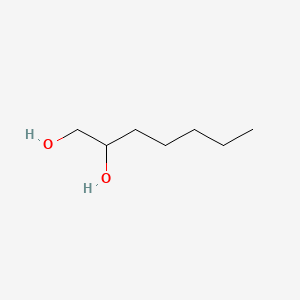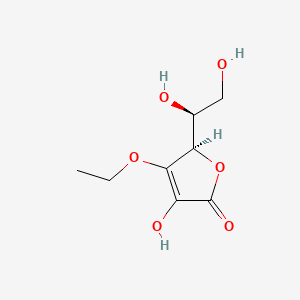
Description: 3-O-ETHYL ASCORBIC ACID — SKIN CONDITIONING.
All Functions: SKIN CONDITIONING
Quick Facts:
- Category: emollient
Proven Benefits At A Glance:
- 3-O-ethyl ascorbic acid (EAA) is a stable, lipophilic form of vitamin C
- Research shows it can help protect skin cells from UV radiation damage
- It appears to work best when combined with other protective ingredients
- Studies indicate it has antioxidant and potential skin-brightening properties
- It’s stable under specific conditions (around pH 5.46 and 36°C)
Safety tier is a starting heuristic from regulatory status and comedogenic rating, not a dermatological verdict — see our Terms for the full disclaimer. Research confidence reflects how many real cited studies back this ingredient, not the strength of their findings.
🧪 3-O-ETHYL ASCORBIC ACID
3-O-ETHYL ASCORBIC ACID
CAS Number: 86404-04-8
Also Known As: —
Category: emollient
Korean Name: 3-O-에틸아스코빅애씨드
3-O-Ethyl Ascorbic Acid is the organic compound.
3-O-ETHYL ASCORBIC ACID is an emollient ingredient used in skincare formulations.
🌍 Regulatory Status
📊 Comedogenicity
📚 Research & Evidence
🔬 The Science
3-O-ethyl ascorbic acid is a derivative of vitamin C designed to be more stable and absorbable than regular ascorbic acid. Here’s what the research actually shows:
#1: UV protection: When human skin cells were exposed to UVA radiation, EAA eliminated changes in protein expression caused by the UV damage (Journal of Pharmacology and Experimental Therapeutics, 2023). In separate research using UVB radiation, EAA combined with another ingredient helped restore normal protein patterns in damaged skin cells (Scientific Reports, 2024). However, the sources don’t specify exactly how much protection or over what timeframe—just that it helped restore cells toward their pre-damage state.
#2: Antioxidant ability: Lab testing measured EAA’s free radical-scavenging power using a standard test called DPPH radical scavenging, with an IC50 value of 0.032 g/L, and showed good reducing ability at 1.5 g/L concentration (Journal of Cosmetic Science, 2018). In plain terms, this means it demonstrated antioxidant activity in controlled conditions, though this doesn’t directly translate to a specific benefit percentage for skin. #3: Skin-brightening potential: Three sources mention EAA is described as having whitening or brightening effects and is used in whitening cream products (Journal of Chromatography Science, 2023; Journal of Cosmetic Science, 2018). Research found it had a tyrosinase inhibitory IC50 value of 7.5 g/L—tyrosinase is an enzyme involved in melanin production—but the sources don’t provide details on visible brightening results in actual human skin.
#4: Works better in combination: When EAA was used alone on UV-damaged cells, it performed one function well (restoring protein expression patterns). But when combined with another ingredient (cannabigerol), the protective effects were broader (Journal of Pharmacology and Experimental Therapeutics, 2023). This suggests antioxidants may work better together, though more research on specific combinations would be needed. Stability matters: For EAA to work effectively in cosmetic products, pH and temperature are important—optimal stability was found at pH 5.46 and around 36°C (Journal of Cosmetic Science, 2018). Important limitation: All these studies were conducted in laboratory settings using cultured skin cells or chemical assays, not on living human skin, so real-world effects may differ.
💧 Skin Type Compatibility
⚠️ Don’t Combine With
🧴 Products Containing 3-O-ETHYL ASCORBIC ACID
- Disaar Vitamine c
- Labcare, Labcare cosmetics Crema viso anti-age
- Tula TULA bedtime bright
- Tula Tula bright start
- Ole Henriksen,OleHenriksen Banana Bright Vitamin C Serum
- Ole Henriksen Banana Bright+ Eye Crème
- OleHenriksen,Ole Henriksen Banana Bright+ Instant Glow Moisturizer
- Cosmia Sérum intense anti rides
- Bubbly, Maxbrands Bubble mask
📄 Related Research
Matched by search — not necessarily verified support for every statement above.
- Gęgotek A et al. (2024). Proteomic analysis of the combined effects of cannabigerol and 3-O-ethyl ascorbic acid on kinase-dependent signalling in UVB-irradiated human keratinocytes. Sci Rep.
- Gęgotek A et al. (2023). The Anti-Inflammatory Action of Cannabigerol Accompanied by the Antioxidant Effect of 3-O-ethyl Ascorbic Acid in UVA-Irradiated Human Keratinocytes. J Pharmacol Exp Ther.
- Permana B et al. (2023). Simultaneous HPLC Determination of Arbutin, Niacinamide and 3-O-Ethyl Ascorbic Acid in Whitening Cream Products in the Presence of Parabens. J Chromatogr Sci.
- Liao WC et al. (2018). Antioxidant Ability and Stability Studies of 3-O-Ethyl Ascorbic Acid, a Cosmetic Tyrosinase Inhibitor. J Cosmet Sci.
Similar Ingredients


📰 More News
-
Bakuchiol: From structural mimicry to systems-level skin biology
PubMed · Jun 2, 2026
-
Rosacea Skincare Including Moisturizers, Serums & Prescribed Creams
The Derm Review · Jun 4, 2026
-
The impact of avobenzone and oxybenzone on fibroblast and keratinocyte membranes. Searching for the role of lipids in the effect of UV filters on skin cells
PubMed · Jun 5, 2026
-
The Best Firming Tightening Anti Aging Body Lotions. For loss of firmness, crepey skin and wrinkles.
The Derm Review · Jun 12, 2026
-
14 of the Best Eczema Creams to Soothe Compromised Skin
The Derm Review · Jun 13, 2026
-
How To Get Rid of Age Spots, Dark Spots & Liver Spots on Hands, Arms, Legs, Body, Face
The Derm Review · Jun 13, 2026