
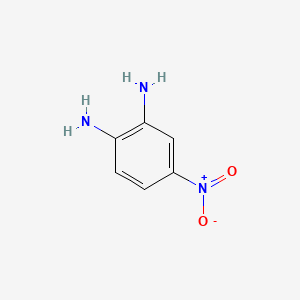
Description: 4-NITRO-O-PHENYLENEDIAMINE — HAIR DYEING.
All Functions: HAIR DYEING
Quick Facts:
- Category: other
- Regulatory Note: Restricted in the EU
Proven Benefits At A Glance:
- 4-NITRO-O-PHENYLENEDIAMINE is a synthetic chemical compound that has been studied for safety in animal research
- At very high doses in pregnant mice, this ingredient caused birth defects and reduced fetal weight
- This ingredient is not typically found in modern consumer skincare products
- Safety data in humans is not available from the sources provided
Safety tier is a starting heuristic from regulatory status and comedogenic rating, not a dermatological verdict — see our Terms for the full disclaimer. Research confidence reflects how many real cited studies back this ingredient, not the strength of their findings.
🧪 4-NITRO-O-PHENYLENEDIAMINE
4-NITRO-O-PHENYLENEDIAMINE
CAS Number: 99-56-9
Also Known As: —
Category: other
EC Number: 202-766-3
Korean Name: p-니트로-o-페닐렌디아민
4-nitro-o-phenylenediamine (CI 76020)
4-NITRO-O-PHENYLENEDIAMINE is an other ingredient used in skincare formulations.
🌍 Regulatory Status
EU conditions: To be printing on the label:
Hair colorants can cause severe allergic reactions.
📊 Comedogenicity
📚 Research & Evidence
🔬 The Science
4-NITRO-O-PHENYLENEDIAMINE (also called 4NOPD) is a synthetic aromatic amine—a type of organic chemical with a benzene ring structure. According to a 1981 Teratology study, researchers tested this compound on pregnant mice to understand potential developmental risks. #1: At doses of 256 mg/kg/day and higher, 4NOPD caused a significant increase in birth defects (malformed fetuses) in mouse studies. #2: At these same high dose levels, the chemical also reduced weight gain in pregnant dams during pregnancy and caused a significant reduction in average fetal weight. The study was designed to evaluate whether the chemical could cause maternal toxicity (harm to the mother) alongside any fetal effects.
It’s important to note that these studies involved direct injection of very high doses into pregnant animals—a scenario quite different from typical skincare exposure. The research does not address safety at the trace or dilute levels that might theoretically appear in cosmetic formulations, nor does it provide any data on human use or safety. The 1981 publication date also means more recent safety research may exist elsewhere. This ingredient is not commonly marketed as an active skincare ingredient in contemporary products.
💧 Skin Type Compatibility
⚠️ Don’t Combine With
🧴 Products Containing 4-NITRO-O-PHENYLENEDIAMINE
📄 Related Research
Matched by search — not necessarily verified support for every statement above.
Similar Ingredients
📰 More News
-
Bakuchiol: From structural mimicry to systems-level skin biology
PubMed · Jun 2, 2026
-
Rosacea Skincare Including Moisturizers, Serums & Prescribed Creams
The Derm Review · Jun 4, 2026
-
The impact of avobenzone and oxybenzone on fibroblast and keratinocyte membranes. Searching for the role of lipids in the effect of UV filters on skin cells
PubMed · Jun 5, 2026
-
The Best Firming Tightening Anti Aging Body Lotions. For loss of firmness, crepey skin and wrinkles.
The Derm Review · Jun 12, 2026
-
14 of the Best Eczema Creams to Soothe Compromised Skin
The Derm Review · Jun 13, 2026
-
How To Get Rid of Age Spots, Dark Spots & Liver Spots on Hands, Arms, Legs, Body, Face
The Derm Review · Jun 13, 2026