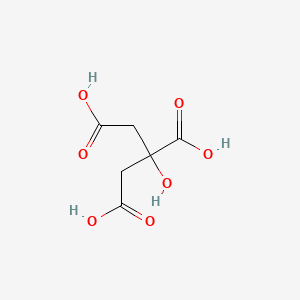
Description: CITRIC ACID — AHA exfoliant, pH adjuster, mild antioxidant.
All Functions: AHA exfoliant, pH adjuster, mild antioxidant
Quick Facts:
- Category: active
Proven Benefits At A Glance:
- Citric acid is widely used in cosmetics and pharmaceutical industries
- Citric acid-based materials show promise in biomedical applications with controllable properties
- A 2% citric acid ointment helped chronic wounds develop healthy tissue suitable for skin grafting
- Citric acid’s effects on hair growth involve complex inflammatory and cellular pathways
Safety tier is a starting heuristic from regulatory status and comedogenic rating, not a dermatological verdict — see our Terms for the full disclaimer. Research confidence reflects how many real cited studies back this ingredient, not the strength of their findings.
🧪 CITRIC ACID
CITRIC ACID
CAS Number: 77-92-9 / 5949-29-1
Also Known As: —
Category: active
EC Number: 201-069-1
Korean Name: 시트릭애씨드
2-Hydroxy-1,2,3-propanetricarboxylic acid
CITRIC ACID is an active ingredient used in skincare formulations.
🌍 Regulatory Status
EU max concentration: 0,2% corresponding to 0,0024% of silver
📊 Comedogenicity
📚 Research & Evidence
🔬 The Science
Citric acid is an organic compound with broad industrial applications. According to research, it is used extensively in the pharmaceutical, food, chemical, and cosmetic industries (Molecules, 2023). The compound is produced industrially using microorganisms, most commonly the fungus Aspergillus niger and yeast Yarrowia lipolytica (Molecules, 2023). In skincare and biomedical contexts, citric acid shows several interesting properties. #1: Citric acid-based biomaterials demonstrate advantages including simple synthesis, controllable structure, biocompatibility, biomimetic viscoelastic mechanical behavior, controllable biodegradability, and capacity for further functionalization (J Mater Chem B, 2024). These materials have been explored for applications in bone tissue engineering, skin tissue engineering, drug and cell delivery, vascular and neural tissue engineering, and bioimaging (J Mater Chem B, 2024).
#2: In wound care, a 2% citric acid ointment proved effective in treating chronic wounds that had not responded to conventional therapy for more than three weeks. The ointment resulted in formation of healthy granulation tissue—the foundational tissue necessary for skin grafting—in all 24 studied cases, requiring between 3 to 20 applications (Wound Manag Prev, 2024). The wounds in this study contained bacteria resistant to multiple antibiotics, yet the citric acid ointment still controlled infection effectively (Wound Manag Prev, 2024). It’s important to note that citric acid’s effects are not uniformly beneficial across all applications. In hair growth studies, citric acid actually suppressed hair growth when injected subcutaneously in mice, triggering inflammatory responses and cell death through specific molecular pathways (J Dermatol, 2022).
However, this research involved systemic injection rather than topical application. Overall, current research shows citric acid has multiple roles depending on how and where it’s used, with particularly strong evidence for wound healing applications and emerging potential in engineered biomaterials for skin tissue work.
💧 Skin Type Compatibility
Derived from this ingredient’s irritancy potential and comedogenicity rating against the needs of each skin type — e.g. oily and acne-prone skin are marked down for pore-clogging ingredients, sensitive skin for irritants. A starting heuristic, not a dermatological verdict.
⚠️ Don’t Combine With
🧴 Products Containing CITRIC ACID
- Schaebens Feuchtigkeits Maske
- Schaebens Totes Meer Wasch-Gel
- aldo Vandini SENSUAL Aroma Handbalsam Hand Cream Tamarinde & Ingwer
- Eucerin Lotion Sun Protection kids SPF 50+
- Nivea Lait crème nourrissant
- Nivea Baby SHAMPOOING & BAIN HAPPY BATH
- BRYNILD GRUPPEN AS NIVEA Creme Soft Douchecrème
- Nivea Men Sensitive Shower Gel Soothing + Bamboo Extract
- Beiersdorf, Nivea Nivea for men doccia gel energy
- Nivea Body Beruhigende After Shave Creme for women, Mit Panthenol
- Nivea, Nivea Men Cavani 9 – Gel douche hydratant originale édition limitée
- Nivea, Nivea Men NIVEA MEN sensitive peau sensible
- Nivea, Nivea Men Power Shampoo Anti-pelliculaire
- Nivea Sun kids Lait protecteur Protect & Sensitive
- BRYNILD GRUPPEN AS Nivea Night Care Cellular 50ml
- Beiersdorf, Nivea Douche soin crème veloutée, au beurre de karité
- zie
- nivea baby
- Nivea Baby sun Crème solaire très haute protection FPS 50+
- Nivea Care Shower Rose & Almond Oil
📄 Related Research
Matched by search — not necessarily verified support for every statement above.
- Behera BC (2020). Citric acid from Aspergillus niger: a comprehensive overview. Crit Rev Microbiol.
- Książek E (2023). Citric Acid: Properties, Microbial Production, and Applications in Industries. Molecules.
- Zhang S et al. (2024). Development of citric acid-based biomaterials for biomedical applications. J Mater Chem B.
- Shi X et al. (2022). Disrupted citric acid metabolism inhibits hair growth. J Dermatol.
- Malu R et al. (2024). Simple and effective approach for wound-bed preparation by topical citric acid application. Wound Manag Prev.
Similar Ingredients


📰 More News
-
The CCL20-CCR6 axis predominantly drives IL-17-mediated psoriasis while modestly contributing to papain-induced type 2 inflammation
PubMed · 23 days ago
-
SkinCeuticals Just Reformulated Its C E Ferulic Serum
Allure · 14 days ago
-
Are Sunscreen Oils Just Tanning Oils in Disguise? Experts Weigh In
Allure · 14 days ago
-
Update to RIFM fragrance ingredient safety assessment, propenylguaethol, CAS Registry Number 94-86-0
PubMed · 14 days ago
-
Earth Harbor Obscura Night Repair Concentrate Review
Allure · 13 days ago
-
Okay, We’ll Bite: Fruity Perfumes Are Cool
Allure · 13 days ago