Mia Seilern
GLYCERYL OLEATE
⚠️ Data is provided for informational purposes only. It may contain inaccuracies and should be independently verified. This is not medical advice. Consult a healthcare professional before making health decisions.

Description: GLYCERYL OLEATE — emulsifier, emollient.

All Functions: emulsifier, emollient

Quick Facts:

  • Category: emollient

Proven Benefits At A Glance:

  • Glyceryl Oleate is a glyceryl monoester used in cosmetics as a skin-conditioning agent and emulsifier
  • It’s considered safe at the concentrations used in cosmetic products
  • It’s not a sensitizer and won’t cause allergic reactions (unlike some related rosin-based glyceryl esters)
  • It’s not a photosensitizer
  • Undiluted forms may cause minor skin irritation, especially on damaged skin
Safety: Generally Low ConcernResearch confidence: Fair

Safety tier is a starting heuristic from regulatory status and comedogenic rating, not a dermatological verdict — see our Terms for the full disclaimer. Research confidence reflects how many real cited studies back this ingredient, not the strength of their findings.

Pregnancy safe

🧪 GLYCERYL OLEATE

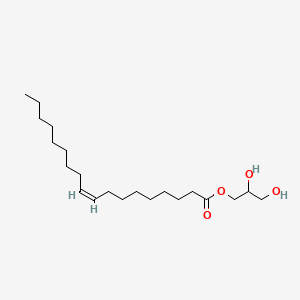
Chemical structure of GLYCERYL OLEATE

GLYCERYL OLEATE

CAS Number: 25496-72-4 / 111-03-5

Also Known As:

Category: emollient

EC Number: 247-038-6

Korean Name: 글리세릴올리에이트

Oleic acid, monoester with glycerol

GLYCERYL OLEATE is an emollient ingredient used in skincare formulations.

emulsifieremollient

🌍 Regulatory Status

EU: No restriction on fileUS: No restriction on file

📊 Comedogenicity

No data yet
Not rated for this ingredient yet.

📚 Research & Evidence

PUBMED CITATIONS
1
Data sources: EU CosIng PubMed

🔬 The Science

Glyceryl Oleate belongs to a family of ingredients called glyceryl monoesters, which are widely used in cosmetics. Here’s what research shows:

#1: Function and composition — Glyceryl Oleate works as a skin-conditioning agent, which means it either softens and smooths the skin (emollient action) or helps bind different ingredients together (surfactant/emulsifying action) (Int J Toxicol, 2004). Importantly, these ingredients aren’t pure single compounds; commercial versions are actually mixtures containing monoesters, diesters, and triesters, with at least 90% purity. #2: How your body handles it — When absorbed, Glyceryl Oleate is metabolized (broken down) into free fatty acids and glycerol—both normal components your body already uses to make triglycerides, the body’s storage form of fat (Int J Toxicol, 2004).

#3: Safety at typical use levels — Glyceryl monoesters in general show little acute or short-term toxicity in animal studies, with no toxicity observed from chronic (long-term) exposure (Int J Toxicol, 2004). At the concentrations actually used in cosmetics—up to 12%—these ingredients are not irritating (Int J Toxicol, 2004). Undiluted or highly concentrated forms may produce minor skin irritation, particularly on abraded (damaged) skin, but this is not a concern at product-use levels. #4: Allergy and sensitivity — Glyceryl Oleate is not classified as a sensitizer, meaning it doesn’t cause allergic reactions upon repeated skin contact (Int J Toxicol, 2004).

(Note: some related rosin-based glyceryl esters may cause allergies, but Glyceryl Oleate is not among them.)

#5: Eye and mutation safety — Glyceryl Oleate (tested as part of Glyceryl Citrate/Lactate/Linoleate/Oleate combinations) was not classified as an ocular irritant in rabbit studies and was not mutagenic in standard genetic toxicity testing (Int J Toxicol, 2004). The research base for Glyceryl Oleate specifically is limited; most detailed findings come from studying related glyceryl monoesters or tested combinations that include it.

💧 Skin Type Compatibility

100%
Sensitive
40%
Oily
100%
Dry
100%
Combination
40%
Acne-prone
100%
Normal

Derived from this ingredient’s irritancy potential and comedogenicity rating against the needs of each skin type — e.g. oily and acne-prone skin are marked down for pore-clogging ingredients, sensitive skin for irritants. A starting heuristic, not a dermatological verdict.

⚠️ Don’t Combine With

No data yet
No known incompatibilities on file for this ingredient.

🧴 Products Containing GLYCERYL OLEATE

📄 Related Research

Matched by search — not necessarily verified support for every statement above.

Similar Ingredients

(20S)-PROTOPANAXADIOL
emollient
View
(ANGELICA ACUTILOBA/PAEONIA LACTIFLORA) ROOT/CNIDIUM OFFICINALE RHIZOME EXTRACT
emollient
View
2-CAPRYLOYL CAPRYLOYL METHYL ALANINATE
emollient
View
2,5-DIHYDROXYBENZOYL DIPEPTIDE-27
humectant
View
2,5-DIHYDROXYBENZOYL DIPEPTIDE-48
humectant
View
3,4-DIHYDROXYBENZOYL DIPEPTIDE-49 AMIDE
humectant
View
ABELMOSCHUS MANIHOT FLOWER WATER
emollient
View
ACACIA DEALBATA FLOWER WAX
emollient
View