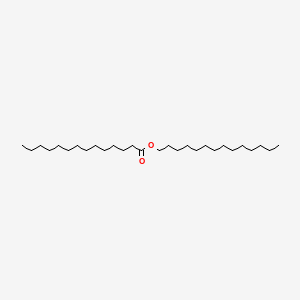
MYRISTYL MYRISTATE
CAS 3234-85-3 · emollient · EC 221-787-9 · KR 미리스틸미리스테이트
Generally Low Concern5 citationsPregnancy safeFungal-acne trigger
Tetradecyl myristate
MYRISTYL MYRISTATE is an emollient ingredient used in skincare formulations.
emollientthickener
⚠️ Data is provided for informational purposes only. It may contain inaccuracies and should be independently verified. This is not medical advice. Consult a healthcare professional before making health decisions.
Quick facts
Description: MYRISTYL MYRISTATE — emollient, thickener.
All Functions: emollient, thickener
Quick Facts:
- Category: emollient
Proven Benefits At A Glance:
- Myristyl myristate is a lipid used in nanostructured lipid carriers (NLCs)—tiny particles designed to deliver active ingredients
- It forms stable, spherical nanoparticles roughly 90–200 nanometers in size
- Research has explored its use in formulations for sunscreen, anti-parasitic drugs, and plant-based actives
- Nanoparticles made with myristyl myristate show good stability over months of storage
- Cell safety testing in research showed these formulations had low toxicity profiles
Chemical Overview
Tetradecyl tetradecanoate is a tetradecanoate ester (myristate ester) resulting from the formal condensation of the carboxy group of tetradecanoic acid (myristic acid) with the hydroxy group of tetradecan-1-ol (myristyl alcohol). Used as an emollient. It has a role as an algal metabolite. It is a wax ester and a tetradecanoate ester. It is functionally related to a tetradecan-1-ol.
Source(s): ChEBI, via PubChem
Comedogenicity
No data yet
Not rated for this ingredient yet.
Similar Ingredients
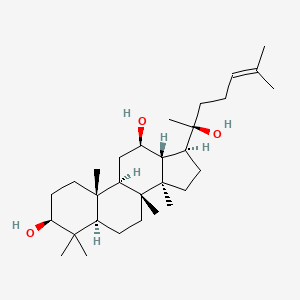
(20S)-PROTOPANAXADIOL
emollient

(ANGELICA ACUTILOBA/PAEONIA LACTIFLORA) ROOT/CNIDIUM OFFICINALE RHIZOME EXTRACT
emollient
2-CAPRYLOYL CAPRYLOYL METHYL ALANINATE
emollient
2,5-DIHYDROXYBENZOYL DIPEPTIDE-27
humectant
2,5-DIHYDROXYBENZOYL DIPEPTIDE-48
humectant
3,4-DIHYDROXYBENZOYL DIPEPTIDE-49 AMIDE
humectant
ABELMOSCHUS MANIHOT FLOWER WATER
emollient
ACACIA DEALBATA FLOWER WAX
emollient
📰 More News
-
The CCL20-CCR6 axis predominantly drives IL-17-mediated psoriasis while modestly contributing to papain-induced type 2 inflammation
PubMed · Jul 11, 2026
-
SkinCeuticals Just Reformulated Its C E Ferulic Serum
Allure · Jul 20, 2026
-
Are Sunscreen Oils Just Tanning Oils in Disguise? Experts Weigh In
Allure · Jul 20, 2026
-
Update to RIFM fragrance ingredient safety assessment, propenylguaethol, CAS Registry Number 94-86-0
PubMed · Jul 20, 2026
-
Earth Harbor Obscura Night Repair Concentrate Review
Allure · Jul 21, 2026
-
Okay, We’ll Bite: Fruity Perfumes Are Cool
Allure · Jul 21, 2026