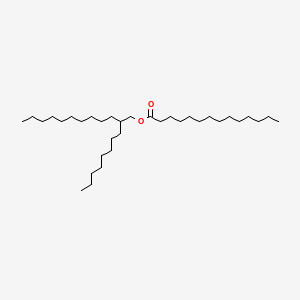
Description: OCTYLDODECYL MYRISTATE — emollient, texture enhancer.
All Functions: emollient, texture enhancer
Quick Facts:
- Category: emollient
- Comedogenic Rating: 3/5
Proven Benefits At A Glance:
- Octyldodecyl myristate is an oil used in hair conditioning and skincare formulations
- Research shows it can help restore the hydrophobic (water-repelling) properties of damaged hair
- It performs similarly to silicone-based conditioners in restoring hair smoothness and gloss after bleaching
- It’s used as a base oil in nanoemulsion formulations for skincare delivery
- A study found it safe for non-target organisms when used in skincare products
Safety tier is a starting heuristic from regulatory status and comedogenic rating, not a dermatological verdict — see our Terms for the full disclaimer. Research confidence reflects how many real cited studies back this ingredient, not the strength of their findings.
🧪 OCTYLDODECYL MYRISTATE
OCTYLDODECYL MYRISTATE
CAS Number: 22766-83-2
Also Known As: —
Category: emollient
EC Number: 245-205-8
Korean Name: 옥틸도데실미리스테이트
2-Octyldodecyl myristate
OCTYLDODECYL MYRISTATE is an emollient ingredient used in skincare formulations.
🌍 Regulatory Status
📊 Comedogenicity
3/5
📚 Research & Evidence
🔬 The Science
Octyldodecyl myristate is an emollient oil—essentially a lubricant—that has been studied for its ability to repair and protect hair and skin. Here’s what the research actually shows:
#1: Hair conditioning and repair. When hair is bleached or chemically damaged, the outer lipid layer (a naturally hydrophobic, or water-repelling, protective coating) gets stripped away. This makes hair feel rough and look dull. According to research published in ACS Omega (2022), conditioning formulations containing octyldodecyl myristate were able to partially or fully restore this natural hydrophobic layer. Notably, silicone-free formulations based on octyldodecyl myristate performed similarly to established silicone-containing products at reducing the rough, “strawy” feel of bleached hair and restoring softness and gloss.
The study used multiple measurement techniques—including atomic force microscopy and biomimetic friction testing—to demonstrate these effects quantitatively. #2: Water solubility and delivery. Octyldodecyl myristate serves as an oil phase in nanoemulsion formulations (tiny oil droplets suspended in water). A J Nanobiotechnology study (2014) used it as a 5% component in a nanoemulsion system, demonstrating that it can help incorporate and deliver active ingredients that don’t dissolve well in water alone. #3: Safety profile. The same nanoemulsion study (2014) reported no negative effects on acetylcholinesterase activity or mortality in mice, suggesting the ingredient is safe for non-target organisms at the concentrations tested.
The research is limited: these studies focus on specific hair damage scenarios and nanoemulsion applications, not comprehensive skincare benefits. The sources don’t provide information about other potential uses or effects beyond hair conditioning and emulsion stability.
💧 Skin Type Compatibility
Derived from this ingredient’s irritancy potential and comedogenicity rating against the needs of each skin type — e.g. oily and acne-prone skin are marked down for pore-clogging ingredients, sensitive skin for irritants. A starting heuristic, not a dermatological verdict.
⚠️ Don’t Combine With
🧴 Products Containing OCTYLDODECYL MYRISTATE
- Anadia Profesional Crema anticelulítica reductora
- lotion
- Jergens Shea Butter
- CHANEL Micro crème/ HYDRA BEAUTY
- Yves Rocher Lait réparateur peaux très sèches
- Laino Soin des lèvres Pro intense
- Cien Crema de manos aloe vera
- Indy Beauty Arbutin & liquorice glow up moisturizer
- DA’WAX Hair Styling Wax
- Edenens Edenens Nectar Purifiant Crème Sébo régulatrice
- nature well extra virgin coconut oil
- Sulwhasoo Concentrated Ginseng Rejuvenating Cream Rich
- CAUDALIE Crème Cachemire Redensifiante 50mL
📄 Related Research
Matched by search — not necessarily verified support for every statement above.
Similar Ingredients

📰 More News
-
The CCL20-CCR6 axis predominantly drives IL-17-mediated psoriasis while modestly contributing to papain-induced type 2 inflammation
PubMed · 23 days ago
-
SkinCeuticals Just Reformulated Its C E Ferulic Serum
Allure · 14 days ago
-
Are Sunscreen Oils Just Tanning Oils in Disguise? Experts Weigh In
Allure · 14 days ago
-
Update to RIFM fragrance ingredient safety assessment, propenylguaethol, CAS Registry Number 94-86-0
PubMed · 14 days ago
-
Earth Harbor Obscura Night Repair Concentrate Review
Allure · 13 days ago
-
Okay, We’ll Bite: Fruity Perfumes Are Cool
Allure · 13 days ago