PYRIDOXINE
CAS 65-23-6 / 8059-24-3 · active · EC 200-603-0 / 232-503-8 · KR 피리독신
3,4-Pyridinedimethanol, 5-hydroxy-6-methyl-; vitamine B6
PYRIDOXINE is an active ingredient used in skincare formulations.
Quick facts
Description: PYRIDOXINE — vitamin B6, skin conditioning.
All Functions: vitamin B6, skin conditioning
Quick Facts:
- Category: active
Proven Benefits At A Glance:
- Pyridoxine is vitamin B6, a form that plays a role in maintaining healthy skin function
- Research shows pyridoxine may increase filaggrin production in skin cells, which is relevant to skin barrier health
- In combination with cysteine and ascorbic acid, pyridoxine may support glutathione production in skin
- High-dose pyridoxine in oral medications has been reported to trigger rosacea-like skin reactions in some cases
- Chemotherapy-related hand-foot syndrome: evidence that pyridoxine prevents this condition is insufficient, though there may be a modest tendency toward reduction
Chemical Overview
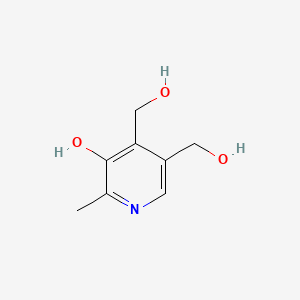
Pyridoxine is a hydroxymethylpyridine with hydroxymethyl groups at positions 4 and 5, a hydroxy group at position 3 and a methyl group at position 2. The 4-methanol form of vitamin B6, it is converted intoto pyridoxal phosphate which is a coenzyme for synthesis of amino acids, neurotransmitters, sphingolipids and aminolevulinic acid. It has a role as a cofactor, a mouse metabolite, a Saccharomyces cerevisiae metabolite, an Escherichia coli metabolite and a human metabolite. It is a member of methylpyridines, a vitamin B6, a monohydroxypyridine and a hydroxymethylpyridine. Pyridoxine is the 4-methanol form of vitamin B6, an important water-soluble vitamin that is naturally present in many foods. As its classification as a vitamin implies, Vitamin B6 (and pyridoxine) are essential nutrients required for normal functioning of many biological systems within the body. While many plants and microorganisms are able to synthesize pyridoxine through endogenous biological processes, animals must obtain it through their diet. More specifically, pyridoxine is converted to pyridoxal 5-phosphate in the body, which is an important coenzyme for synthesis of amino acids, neurotransmitters (serotonin, norepinephrine), sphingolipids, and aminolevulinic acid. It’s important to note that Vitamin B6 is the collective term for a group of three related compounds, pyridoxine, pyridoxal, and pyridoxamine, and their phosphorylated derivatives, pyridoxine 5′-phosphate, pyridoxal 5′-phosphate and pyridoxamine 5′-phosphate. Although all six of these compounds should technically be referred to as vitamin B6, the term vitamin B6 is commonly used interchangeably with just one of them, pyridoxine. Vitamin B6, principally in its biologically active coenzyme form pyridoxal 5′-phosphate, is involved in a wide range of biochemical reactions, including the metabolism of amino acids and glycogen, the synthesis of nucleic acids, hemogloblin, sphingomyelin and other sphingolipids, and the synthesis of the neurotransmitters serotonin, dopamine, norepinephrine and gamma-aminobutyric acid (GABA). Pyridoxine is used medically for the treatment of vitamin B6 deficiency and for the prophylaxis of isoniazid-induced peripheral neuropathy (due to [DB00951]’s mechanism of action which competitively inhibits the action of pyridoxine in the above-mentioned metabolic functions). It is also used in combination with [DB00366] (as the commercially available product Diclectin) for the treatment of nausea and vomiting in pregnancy. Pyridoxine is a metabolite found in or produced by Escherichia coli (strain K12, MG1655).
Source(s): E. coli Metabolome Database (ECMDB), ChEBI, DrugBank, via PubChem
Comedogenicity
Similar Ingredients

📰 More News
-
The CCL20-CCR6 axis predominantly drives IL-17-mediated psoriasis while modestly contributing to papain-induced type 2 inflammation
PubMed · Jul 11, 2026
-
SkinCeuticals Just Reformulated Its C E Ferulic Serum
Allure · Jul 20, 2026
-
Are Sunscreen Oils Just Tanning Oils in Disguise? Experts Weigh In
Allure · Jul 20, 2026
-
Update to RIFM fragrance ingredient safety assessment, propenylguaethol, CAS Registry Number 94-86-0
PubMed · Jul 20, 2026
-
Earth Harbor Obscura Night Repair Concentrate Review
Allure · Jul 21, 2026
-
Okay, We’ll Bite: Fruity Perfumes Are Cool
Allure · Jul 21, 2026