CHAMOMILE FLOWER ABSOLUTE
CAS 8002-66-2 · fragrance
CHAMOMILE FLOWER ABSOLUTE is a fragrance ingredient used in skincare formulations.
Quick facts
Description: CHAMOMILE FLOWER ABSOLUTE — fragrance.
All Functions: fragrance
Quick Facts:
- Category: fragrance
Chemical Overview
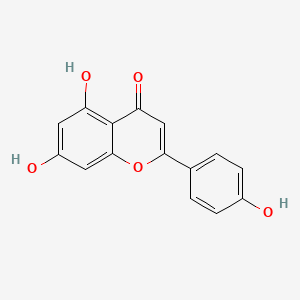
Apigenin is a trihydroxyflavone that is flavone substituted by hydroxy groups at positions 4′, 5 and 7. It induces autophagy in leukaemia cells. It has a role as a metabolite and an antineoplastic agent. It is a conjugate acid of an apigenin-7-olate. apigenin has been reported in Camellia sinensis, Apis, and other organisms with data available. Apigenin is a plant-derived flavonoid that has significant promise as a skin cancer chemopreventive agent. Apigenin inhibits the expression of involucrin (hINV), a marker of keratinocyte differentiation, is increased by differentiating agents via a protein kinase Cdelta (PKCdelta), Ras, MEKK1, MEK3 cascade that increases AP1 factor level and AP1 factor binding to DNA elements in the hINV promoter. Apigenin suppresses the 12-O-tetradeconylphorbol-13-acetate-dependent increase in AP1 factor expression and binding to the hINV promoter and the increase in hINV promoter activity. Apigenin also inhibits the increase in promoter activity observed following overexpression of PKCdelta, constitutively active Ras, or MEKK1. The suppression of PKCdelta activity is associated with reduced phosphorylation of PKCdelta-Y311. Activation of hINV promoter activity by the green tea polyphenol, (-)-epigellocathecin-3-gallate, is also inhibited by apigenin, suggesting that the two chemopreventive agents can produce opposing actions in keratinocytes. (A7924). Apigenin, a flavone abundantly found in fruits and vegetables, exhibits antiproliferative, anti-inflammatory, and antimetastatic activities through poorly defined mechanisms. This flavonoid provides selective activity to promote caspase-dependent-apoptosis of leukemia cells and uncover an essential role of PKCdelta during the induction of apoptosis by apigenin. (A7925). Apigenin markedly induces the expression of death receptor 5 (DR5) and synergistically acts with exogenous soluble recombinant human tumor necrosis factor-related apoptosis-inducing ligand (TRAIL) to induce apoptosis in malignant tumor cells. On the other hand, apigenin-mediated induction of DR5 expression is not observed in normal human peripheral blood mononuclear cells. Moreover, apigenin does not sensitize normal human peripheral blood mononuclear cells to TRAIL-induced apoptosis. (A7926).
Source(s): LOTUS – the natural products occurrence database, Toxin and Toxin Target Database (T3DB), ChEBI, via PubChem
Comedogenicity
Similar Ingredients
📰 More News
-
The CCL20-CCR6 axis predominantly drives IL-17-mediated psoriasis while modestly contributing to papain-induced type 2 inflammation
PubMed · 23 days ago
-
SkinCeuticals Just Reformulated Its C E Ferulic Serum
Allure · 14 days ago
-
Are Sunscreen Oils Just Tanning Oils in Disguise? Experts Weigh In
Allure · 14 days ago
-
Update to RIFM fragrance ingredient safety assessment, propenylguaethol, CAS Registry Number 94-86-0
PubMed · 14 days ago
-
Earth Harbor Obscura Night Repair Concentrate Review
Allure · 13 days ago
-
Okay, We’ll Bite: Fruity Perfumes Are Cool
Allure · 13 days ago