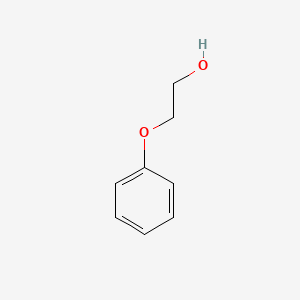
2-PHENOXYETHANOL
CAS 122-99-6 · fragrance
2-PHENOXYETHANOL. Formula: C8H10O2. MW: 138.16. IUPAC: 2-phenoxyethanol
2-PHENOXYETHANOL is a fragrance ingredient used in skincare formulations.
Quick facts
Description: 2-PHENOXYETHANOL — fragrance.
All Functions: fragrance
Quick Facts:
- Category: fragrance
Proven Benefits At A Glance:
- 2-phenoxyethanol is a preservative and fragrance ingredient used in cosmetics, pharmaceuticals, and personal care products
- It’s an aromatic glycol ether that can be absorbed through both skin and digestion
- When absorbed, your body breaks it down (metabolizes) into other compounds and eliminates them primarily through urine
- Dermal (skin) absorption is lower than oral absorption—about 45% of a topically applied dose enters the bloodstream
- Absorption through skin happens relatively quickly, with peak blood levels around 3 hours after application
- Your body efficiently eliminates the compound and its metabolites, mostly within 48 hours
Chemical Overview
Ethylene glycol phenyl ether is a colorless liquid with a pleasant odor. Density 1.02 g / cm3. An irritant. 2-phenoxyethanol is an aromatic ether that is phenol substituted on oxygen by a 2-hydroxyethyl group. It has a role as an antiinfective agent and a central nervous system depressant. It is a primary alcohol, a glycol ether and an aromatic ether. It is functionally related to a phenol. Phenoxyethanol is a colorless liquid with a pleasant odor. It is a glycol ether used as a perfume fixative, insect repellent, antiseptic, solvent, preservative, and also as an anesthetic in fish aquaculture. Phenoxyethanol is an ether alcohol with aromatic properties. It is both naturally found and manufactured synthetically. Demonstrating antimicrobial ability, phenoxyethanol acts as an effective preservative in pharmaceuticals, cosmetics and lubricants. Phenoxyethanol (EU), or PE, is the most commonly used globally-approved preservative in personal care formulations. It is very easy to use in various types of formulations and is chemically stable. Phenoxyethanol is a colorless, clear, oily liquid with a faint aromatic odor at room temperature and a low water solubility and evaporation rate. It is produced by reacting phenol (EU) and ethylene oxide (EU) at a high temperature and pressure. This substance occurs naturally in green tea (EU). According to the European Union Cosmetics Regulation (EC) n.1223/2009, phenoxyethanol is authorized as a preservative in cosmetic formulations at a maximum concentration of 1.0%. Phenoxyethanol has been classified as an antimicrobial and preservative by Health Canada. It has also been used in vaccines and shown to inactivate bacteria, and several types of yeast.
Source(s): ChEBI, DrugBank, CAMEO Chemicals, via PubChem
Comedogenicity
Similar Ingredients
📰 More News
-
The CCL20-CCR6 axis predominantly drives IL-17-mediated psoriasis while modestly contributing to papain-induced type 2 inflammation
PubMed · Jul 11, 2026
-
SkinCeuticals Just Reformulated Its C E Ferulic Serum
Allure · Jul 20, 2026
-
Are Sunscreen Oils Just Tanning Oils in Disguise? Experts Weigh In
Allure · Jul 20, 2026
-
Update to RIFM fragrance ingredient safety assessment, propenylguaethol, CAS Registry Number 94-86-0
PubMed · Jul 20, 2026
-
Earth Harbor Obscura Night Repair Concentrate Review
Allure · Jul 21, 2026
-
Okay, We’ll Bite: Fruity Perfumes Are Cool
Allure · Jul 21, 2026