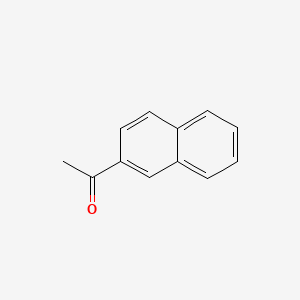
2-ACETONAPHTHONE
CAS 93-08-3 · fragrance · EC 202-216-2 · KR 2-아세토나프톤
1-(2-Naphthalenyl)ethanone
2-ACETONAPHTHONE is a fragrance ingredient used in skincare formulations.
Quick facts
Description: 2-ACETONAPHTHONE — FRAGRANCE, PERFUMING.
All Functions: FRAGRANCE, PERFUMING
Quick Facts:
- Category: fragrance
Proven Benefits At A Glance:
- 2-Acetonaphthone is a synthetic fragrance material used in some cosmetics
- When exposed to UV radiation or sunlight, it can break down and generate reactive oxygen species (ROS)—unstable molecules that can damage cells
- In lab studies, it reduced skin cell viability by 44–57% under UVA and sunlight exposure
- Research suggests avoiding sun exposure after applying products containing this ingredient
Chemical Overview
2-acetylnaphthalene is a naphthyl ketone that is naphthalene substituted at position 2 by an acetyl group. Methyl beta-naphthyl ketone is used as a food additive [EAFUS] (“EAFUS: Everything Added to Food in the United States. [http://www.eafus.com/]”).
Methyl beta-naphthyl ketone belongs to the family of Naphthalenes. These are compounds containing a naphthalene moiety, which consists of two fused benzene rings.
Source(s): Toxin and Toxin Target Database (T3DB), ChEBI, via PubChem
Comedogenicity
Similar Ingredients
📰 More News
-
The CCL20-CCR6 axis predominantly drives IL-17-mediated psoriasis while modestly contributing to papain-induced type 2 inflammation
PubMed · Jul 11, 2026
-
SkinCeuticals Just Reformulated Its C E Ferulic Serum
Allure · Jul 20, 2026
-
Are Sunscreen Oils Just Tanning Oils in Disguise? Experts Weigh In
Allure · Jul 20, 2026
-
Update to RIFM fragrance ingredient safety assessment, propenylguaethol, CAS Registry Number 94-86-0
PubMed · Jul 20, 2026
-
Earth Harbor Obscura Night Repair Concentrate Review
Allure · Jul 21, 2026
-
Okay, We’ll Bite: Fruity Perfumes Are Cool
Allure · Jul 21, 2026