
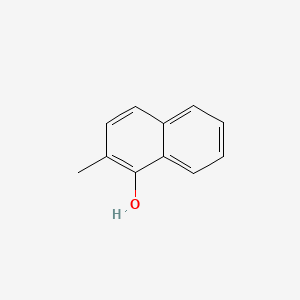
Description: 2-METHYL-1-NAPHTHOL — HAIR DYEING.
All Functions: HAIR DYEING
Quick Facts:
- Category: other
- Regulatory Note: Restricted in the EU
Proven Benefits At A Glance:
- 2-methyl-1-naphthol is a chemical compound that can be converted into menadione (vitamin K3) through oxidation
- This conversion happens efficiently at mild temperatures (60–80°C) without needing a catalyst
- The research is chemistry-focused and does not establish skincare benefits
Safety tier is a starting heuristic from regulatory status and comedogenic rating, not a dermatological verdict — see our Terms for the full disclaimer. Research confidence reflects how many real cited studies back this ingredient, not the strength of their findings.
🧪 2-METHYL-1-NAPHTHOL
2-METHYL-1-NAPHTHOL
CAS Number: 7469-77-4
Also Known As: —
Category: other
EC Number: 231-265-2
Korean Name: 2-메틸-1-나프톨
2-Methyl-1-naphthol
2-METHYL-1-NAPHTHOL is an other ingredient used in skincare formulations.
🌍 Regulatory Status
EU conditions: To be printed on the label:
Hair colorants can cause severe allergic reactions.
📊 Comedogenicity
📚 Research & Evidence
🔬 The Science
The available research on 2-methyl-1-naphthol (MNL) comes from a 2011 chemistry study in the Journal of Physical Chemistry B and addresses its oxidation mechanism rather than skincare applications. The research shows that MNL can be oxidized with oxygen to produce 2-methyl-1,4-naphthoquinone (also called menadione or vitamin K3) under mild conditions—specifically 60–80°C at 3 atmospheres of oxygen pressure—without requiring an external catalyst or light sensitizer (J Phys Chem B, 2011). The reaction achieves up to 80% selectivity in nonpolar solvents. The study focuses on the chemical mechanism of this transformation, using spectroscopic and computational methods to determine that thermal intersystem crossing (a quantum process allowing the molecule to change spin states) significantly contributes to the oxidation pathway.
No skincare efficacy, safety, or cosmetic application data are present in the provided sources. Any claims about 2-methyl-1-naphthol’s benefits for skin would require separate clinical or cosmetic research not included here.
💧 Skin Type Compatibility
⚠️ Don’t Combine With
🧴 Products Containing 2-METHYL-1-NAPHTHOL
📄 Related Research
Matched by search — not necessarily verified support for every statement above.
Similar Ingredients
📰 More News
-
Bakuchiol: From structural mimicry to systems-level skin biology
PubMed · Jun 2, 2026
-
Rosacea Skincare Including Moisturizers, Serums & Prescribed Creams
The Derm Review · Jun 4, 2026
-
The impact of avobenzone and oxybenzone on fibroblast and keratinocyte membranes. Searching for the role of lipids in the effect of UV filters on skin cells
PubMed · Jun 5, 2026
-
The Best Firming Tightening Anti Aging Body Lotions. For loss of firmness, crepey skin and wrinkles.
The Derm Review · Jun 12, 2026
-
14 of the Best Eczema Creams to Soothe Compromised Skin
The Derm Review · Jun 13, 2026
-
How To Get Rid of Age Spots, Dark Spots & Liver Spots on Hands, Arms, Legs, Body, Face
The Derm Review · Jun 13, 2026