4-AMINO-2-HYDROXYTOLUENE
⚠️ Data is provided for informational purposes only. It may contain inaccuracies and should be independently verified. This is not medical advice. Consult a healthcare professional before making health decisions.

Description: 4-AMINO-2-HYDROXYTOLUENE — HAIR DYEING.

All Functions: HAIR DYEING

Quick Facts:

  • Category: other
  • Regulatory Note: Restricted in the EU

Proven Benefits At A Glance:

  • 4-amino-2-hydroxytoluene (AHT) is an aromatic amine used in oxidative hair dyes
  • When applied to skin, AHT undergoes ‘first-pass metabolism’—the skin chemically transforms it before it enters the bloodstream
  • The skin converts AHT primarily into N-acetyl-AHT through an enzyme called NAT1
  • Washing off hair dye after 30 minutes reduces exposure to AHT and its metabolites by roughly one-third to 40%
  • The metabolic fate of AHT differs depending on whether it’s applied topically (to skin) versus absorbed systemically
Safety: CautionResearch confidence: Good

Safety tier is a starting heuristic from regulatory status and comedogenic rating, not a dermatological verdict — see our Terms for the full disclaimer. Research confidence reflects how many real cited studies back this ingredient, not the strength of their findings.

🧪 4-AMINO-2-HYDROXYTOLUENE

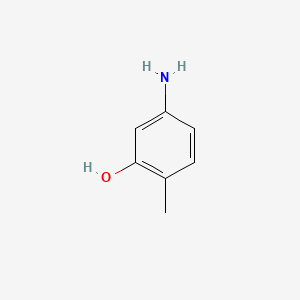
Chemical structure of 4-AMINO-2-HYDROXYTOLUENE

4-AMINO-2-HYDROXYTOLUENE

CAS Number: 2835-95-2

Also Known As:

Category: other

EC Number: 220-618-6

Korean Name: 4-아미노-2-하이드록시톨루엔

5-amino-o-cresol

4-AMINO-2-HYDROXYTOLUENE is an other ingredient used in skincare formulations.

HAIR DYEING

🌍 Regulatory Status

EU: RestrictedUS: No restriction on file

EU conditions: (a) To be printed on the label: The mixing ratio. “ Hair colorants can cause severe allergic reactions.Read and follow instructions. This product is not intended for use on persons under the age of 16. Temporary ‘black henna’ tattoos may increase your risk of allergy. Do not colour your hair if: — you have a rash on your face or sensitive, irritated and damaged scalp, — you have ever experienced any reaction after colouring your hair, — you have experienced a reaction to a temporary ‘black henna’ tattoo in the past.”
(b) To be printed on the label: The mixing ratio. “For professional use only. This product can cause severe allergic reactions. Read and follow instructions. This product is not intended for use on persons under the age of 16. Temporary ‘black henna’ tattoos may increase the risk of allergy. Eyelashes shall not be coloured if the consumer:— has a rash on the face or sensitive, irritated and damaged scalp,— has experienced any reaction after colouring hair or eyelashes, — has experienced a reaction to a temporary ‘black henna’ tattoo in the past. Rinse eyes immediately if product comes into contact with them.”

📊 Comedogenicity

No data yet
Not rated for this ingredient yet.

📚 Research & Evidence

PUBMED CITATIONS
4
Data sources: EU CosIng PubMed

🔬 The Science

4-amino-2-hydroxytoluene (AHT) is an aromatic amine—a type of organic compound—commonly found in oxidative hair coloring products where skin contact is inevitable during application. Understanding how the skin processes this ingredient is important for safety assessment. #1: First-pass skin metabolism. When AHT is applied topically, the skin doesn’t simply absorb it unchanged. Instead, skin cells metabolize (chemically transform) AHT before it can enter the systemic circulation. This is called a ‘first-pass effect’ (Toxicol Appl Pharmacol, 2009; J Appl Toxicol, 2021). Research using reconstructed skin models and microfluidic systems confirmed this happens in vitro, mirroring what occurs in vivo (J Appl Toxicol, 2021).

#2: N-acetylation as the dominant pathway. The primary metabolic route for AHT in skin is N-acetylation—a process where an acetyl group is added to the molecule. This conversion is catalyzed by the enzyme NAT1 (N-acetyltransferase 1), which naturally exists in skin cells (Toxicol Appl Pharmacol, 2009). When 12.5 mg/kg AHT was applied topically in human studies, N-acetyl-AHT became the major metabolite, representing 66% of the applied dose. By comparison, after intravenous or oral administration (which bypass first-pass skin metabolism), N-acetyl-AHT comprised only 37% and 32% of the dose, respectively (Toxicol Appl Pharmacol, 2009). In laboratory models using reconstructed skin, topical application of lower doses resulted in a 327% higher area under the curve (AUC—a measure of total exposure over time) for N-acetyl-AHT compared to systemic application, further demonstrating the skin’s metabolic capacity (J Appl Toxicol, 2021).

#3: Secondary metabolites. Beyond N-acetylation, AHT also forms AHT-sulfate and AHT-glucuronide as minor metabolites (Toxicol Appl Pharmacol, 2009). Interestingly, the ratio of these metabolites shifts depending on application route: topical application resulted in decreased AHT-sulfate compared to systemic application, consistent with the dominant N-acetylation pathway activated by skin contact (J Appl Toxicol, 2021). #4: Impact of rinsing. Consumer use typically involves rinsing off hair dye after a period of time. When reconstructed full-thickness skin models were washed 30 minutes after AHT application, systemic exposure to AHT and its metabolites decreased by 33% and 40%–43%, respectively (J Appl Toxicol, 2024). This suggests that timing of product removal affects the total amount absorbed.

#5: Dose-dependent saturation. At very high doses (100 µM circuit concentration), the skin’s metabolic capacity can become saturated, meaning the skin cannot process additional AHT at a proportionally faster rate (J Appl Toxicol, 2021). However, at lower consumer-relevant doses (2.5 µM), metabolic differences between topical and systemic routes remain detectable, indicating the first-pass effect is operative at typical exposure levels. Limitations: The sources are based primarily on laboratory models (reconstructed skin tissue and microfluidic systems) rather than direct human studies beyond one older in vivo comparison. While these models successfully replicate human skin metabolism patterns observed in vivo, they represent controlled conditions that may not capture all complexity of real-world hair dyeing scenarios.

💧 Skin Type Compatibility

No data yet
Per-skin-type data isn’t curated for this ingredient yet.

⚠️ Don’t Combine With

No data yet
No known incompatibilities on file for this ingredient.

🧴 Products Containing 4-AMINO-2-HYDROXYTOLUENE

📄 Related Research

Matched by search — not necessarily verified support for every statement above.

Similar Ingredients

1-ACETOXY-2-METHYLNAPHTHALENE
other
View
1-HYDROXYETHYL 4,5-DIAMINO PYRAZOLE SULFATE
other
View
1-NAPHTHOL
1-NAPHTHOL
other
View
1,5-NAPHTHALENEDIOL
1,5-NAPHTHALENEDIOL
other
View

Loading

Update cookies preferences