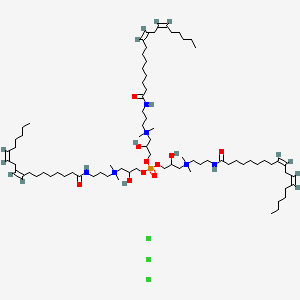
Description: LINOLEAMIDOPROPYL PG-DIMONIUM CHLORIDE PHOSPHATE — conditioning agent, skin feel enhancer.
All Functions: conditioning agent, skin feel enhancer
Quick Facts:
- Category: emollient
Proven Benefits At A Glance:
- A conditioning agent derived from coconut oil found in personal care products like wipes, shampoos, and body washes
- Used as part of antimicrobial formulations to help preserve cosmetic products
- Allergic contact dermatitis to this ingredient is rare, though documented cases exist
- Often combined with other ingredients in products rather than used alone
Safety tier is a starting heuristic from regulatory status and comedogenic rating, not a dermatological verdict — see our Terms for the full disclaimer. Research confidence reflects how many real cited studies back this ingredient, not the strength of their findings.
🧪 LINOLEAMIDOPROPYL PG-DIMONIUM CHLORIDE PHOSPHATE
LINOLEAMIDOPROPYL PG-DIMONIUM CHLORIDE PHOSPHATE
CAS Number: —
Also Known As: —
Category: emollient
Korean Name: 리놀레아미도프로필피지-다이모늄클로라이드포스페이트
1-Propanaminium, 2,3-dihydroxy-N,N-dimethyl-N-[3-(1-oxo-9,12-octadecadienylamino)propyl]-, 3-phosphate triester, trichloride
LINOLEAMIDOPROPYL PG-DIMONIUM CHLORIDE PHOSPHATE is an emollient ingredient used in skincare formulations.
🌍 Regulatory Status
📊 Comedogenicity
📚 Research & Evidence
🔬 The Science
Linoleamidopropyl PG-dimonium chloride phosphate (also referred to as cocamidopropyl PG-dimonium chloride phosphate in research literature) is a phospholipid complex derived from coconut oil. According to a 2017 analysis of personal hygiene wet wipes published in Dermatitis, this ingredient appeared in 11.1% of the 54 products surveyed, making it a moderately common component in that category of products. #1: Antimicrobial function — Recent research in Scientific Reports (2024) identified this ingredient as a multifunctional ingredient with antimicrobial properties. When combined with other compounds like ricinoleic acid and raspberry ketone, or with palmitoleic acid and sorbitan caprylate, it demonstrated enhanced antimicrobial efficacy compared to using these ingredients individually.
These synergistic combinations successfully preserved cosmetic formulations (including shampoos, body washes, and creams) for up to 28 days in preservation challenge testing, suggesting it can help reduce reliance on conventional preservatives. #2: Rare allergen profile — While Contact Dermatitis (2006) documented a case of allergic contact dermatitis involving this ingredient in a facial hydrating lotion, the source notes that contact allergy to cocamidopropyl PG-dimonium chloride phosphate is generally rare. This contrasts with more common allergens identified in the same product category, particularly fragrance and various preservatives like phenoxyethanol and parabens, which appeared far more frequently in wet wipes (55.6% and 20.4% respectively, per Dermatitis 2017).
💧 Skin Type Compatibility
⚠️ Don’t Combine With
🧴 Products Containing LINOLEAMIDOPROPYL PG-DIMONIUM CHLORIDE PHOSPHATE
- shampoo shampoo
- Neutrogena Deep Clean Gentle Facial Scrub
- Neutrogena Gel de Limpeza Facial Neutrogena Hydro Boost
- Henkel, Schwarzkopf Palette Salon Colors 8.5
- Henkel, Schwarzkopf Natural & Easy 545 blond cendré
- OGX Damage Remedy + Coconut Miracle Oil Shampoo
- selsum blue shampoo
- pantene essential botanicals volumizing shampoo
- shampoo
- Shampoo Herbal Essences Rose Hips
- Henkel, Palette, Saint Algue Coloration crème soin à l’huile d’argan Châtain caramel 660
- Neutrogena Neutrogena Hydro Boost Aqua Reinigingsgel
- Neutrogena Scalp relief shampoo
- Adidas Adidas After-shave Pure Game
- Herbal Essences ignite my colour
- Herbal Essences Moisture-Balancing Shampoo
- live hairdye
- Conaxess trade norway Natural & Easy 542 Opal Askblond
- Conaxess trade norway Natural & Easy 570 Mellombrun
- Conaxess trade norway Natural & Easy 580 Mørkbrun
📄 Related Research
Matched by search — not necessarily verified support for every statement above.
- Aschenbeck KA et al. (2017). Allergenic Ingredients in Personal Hygiene Wet Wipes. Dermatitis.
- Senthilkumar K et al. (2024). Preparation of self-preserving personal care cosmetic products using multifunctional ingredients and other cosmetic ingredients. Sci Rep.
- Lorenzi S et al. (1996). Contact sensitization to cocamidopropyl PG-dimonium chloride phosphate in a cosmetic cream. Contact Dermatitis.
- Roberts H et al. (2006). Allergic contact dermatitis to panthenol and cocamidopropyl PG dimonium chloride phosphate in a facial hydrating lotion. Contact Dermatitis.
Similar Ingredients


📰 More News
-
The CCL20-CCR6 axis predominantly drives IL-17-mediated psoriasis while modestly contributing to papain-induced type 2 inflammation
PubMed · 23 days ago
-
SkinCeuticals Just Reformulated Its C E Ferulic Serum
Allure · 14 days ago
-
Are Sunscreen Oils Just Tanning Oils in Disguise? Experts Weigh In
Allure · 14 days ago
-
Update to RIFM fragrance ingredient safety assessment, propenylguaethol, CAS Registry Number 94-86-0
PubMed · 14 days ago
-
Earth Harbor Obscura Night Repair Concentrate Review
Allure · 13 days ago
-
Okay, We’ll Bite: Fruity Perfumes Are Cool
Allure · 13 days ago