Mia Seilern
ZINC PCA
⚠️ Data is provided for informational purposes only. It may contain inaccuracies and should be independently verified. This is not medical advice. Consult a healthcare professional before making health decisions.

Description: ZINC PCA — trace mineral, sebum regulation, soothing.

All Functions: trace mineral, sebum regulation, soothing

Quick Facts:

  • Category: active
  • Regulatory Note: Restricted in the EU

Proven Benefits At A Glance:

  • Zinc PCA is an ingredient used in topical skincare products to help manage seborrheic dermatitis (a chronic inflammatory skin condition)
  • Research shows it may help reduce scaling, redness, and itching when used in formulas with other active ingredients
  • Studies found it was well-tolerated with no significant side effects reported
  • It appears in products designed for both facial and scalp seborrheic dermatitis
Safety: CautionResearch confidence: Good

Safety tier is a starting heuristic from regulatory status and comedogenic rating, not a dermatological verdict — see our Terms for the full disclaimer. Research confidence reflects how many real cited studies back this ingredient, not the strength of their findings.

🧪 ZINC PCA

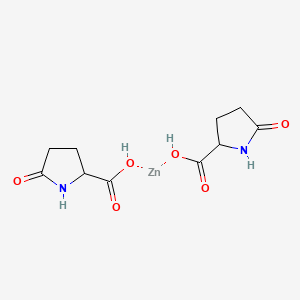
Chemical structure of ZINC PCA

ZINC PCA

CAS Number: 68107-75-5 / 15454-75-8

Also Known As:

Category: active

EC Number: 268-475-9 / 239-473-5

Korean Name: 징크피씨에이

Proline, 5-oxo-, zinc salt

ZINC PCA is an active ingredient used in skincare formulations.

trace mineralsebum regulationsoothing

🌍 Regulatory Status

EU: RestrictedUS: No restriction on file

EU max concentration: 1% (as zinc)

📊 Comedogenicity

No data yet
Not rated for this ingredient yet.

📚 Research & Evidence

PUBMED CITATIONS
5
Data sources: EU CosIng PubMed

🔬 The Science

Zinc PCA (the zinc salt of L-pyrrolidone carboxylate) is a skin-conditioning ingredient that has been studied as part of multi-ingredient topical formulas for seborrheic dermatitis—a chronic, recurrent inflammatory skin condition that causes redness, flaking, and itching, especially in areas with more oil glands. #1: For facial seborrheic dermatitis, zinc PCA appears in non-steroidal cream formulas alongside other active ingredients like piroctone olamine (an antifungal) and stearyl glycyrrhetinate (an anti-inflammatory). In a 60-day clinical trial published in Clinical & Cosmetic Investigative Dermatology (2019), a cream containing zinc PCA showed statistically significant improvements in scaling, redness, and itching by day 15, with further improvement by day 60; 90% of patients showed overall improvement, with 53% experiencing excellent response (>80% improvement).

A separate case series in the Journal of Drugs in Dermatology (2020) of 11 patients with mild-to-moderate facial seborrheic dermatitis using an 8-week treatment with a non-steroidal cream containing zinc PCA reported that all patients improved, with 81.8% showing excellent response and 18.1% showing good response. #2: In HIV-positive patients with mild-to-moderate facial seborrheic dermatitis, a 12-week study published in Clinical & Cosmetic Investigative Dermatology (2022) found that a topical cream containing zinc PCA (applied twice daily) produced clinical improvement in all 20 patients, with no adverse effects and no need for rescue corticosteroid therapy. #3: For scalp seborrheic dermatitis, zinc PCA was studied as part of a combination treatment in the Journal of Cosmetic Dermatology (2025).

A 4-week intensive phase using a pre-application gel containing zinc PCA plus a cleansing lotion, followed by 12 weeks of maintenance with the cleansing lotion, showed significant reductions in dandruff scores, itchiness, redness, and greasiness by week 4. After 16 weeks, 12 patients with severe scalp seborrheic dermatitis improved to mild, and six with moderate improved to mild, for an overall clinical improvement rate of 80%. Across all studies, products containing zinc PCA were well-tolerated with no significant adverse effects reported. However, it’s important to note that zinc PCA was not tested in isolation—it was always combined with other active ingredients, so its individual contribution to efficacy cannot be separated from the other components in these formulas.

💧 Skin Type Compatibility

No data yet
Per-skin-type data isn’t curated for this ingredient yet.

⚠️ Don’t Combine With

No data yet
No known incompatibilities on file for this ingredient.

🧴 Products Containing ZINC PCA

📄 Related Research

Matched by search — not necessarily verified support for every statement above.

Similar Ingredients

ALLANTOIN
ALLANTOIN
active
View
ALOE BARBADENSIS LEAF EXTRACT
active
View
ALTHAEA OFFICINALIS EXTRACT
skin conditioning
View
AMMONIUM GLYCYRRHIZATE
active
View
ARNICA MONTANA EXTRACT
active
View
AVENA SATIVA KERNEL EXTRACT
active
View
AVENA SATIVA KERNEL FLOUR
active
View
BETA-GLUCAN
BETA-GLUCAN
active
View