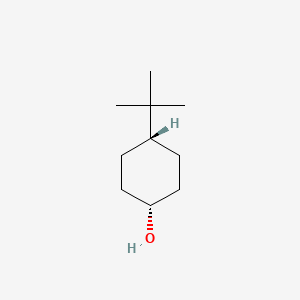
Description: 4-T-BUTYLCYCLOHEXANOL — FRAGRANCE, PERFUMING, SKIN PROTECTING.
All Functions: FRAGRANCE, PERFUMING, SKIN PROTECTING
Quick Facts:
- Category: fragrance
Proven Benefits At A Glance:
- 4-T-BUTYLCYCLOHEXANOL is a TRPV1 antagonist—a compound that blocks a specific nerve receptor involved in skin sensitivity
- Research shows it can provide immediate relief from stinging and burning sensations when applied to skin
- Studies document improvements in skin redness, tightness, and discomfort in sensitive skin conditions
- It appears effective when combined with licochalcone A, an anti-inflammatory ingredient from licorice
- Multiple clinical trials found it was very well tolerated with no reported safety concerns
Safety tier is a starting heuristic from regulatory status and comedogenic rating, not a dermatological verdict — see our Terms for the full disclaimer. Research confidence reflects how many real cited studies back this ingredient, not the strength of their findings.
🧪 4-T-BUTYLCYCLOHEXANOL
4-T-BUTYLCYCLOHEXANOL
CAS Number: 98-52-2/21862-63-5
Also Known As: —
Category: fragrance
EC Number: 202-676-4/-
Korean Name: 4-t-부틸사이클로헥산올
Cyclohexanol, 4-(1,1-dimethylethyl)-
4-T-BUTYLCYCLOHEXANOL is a fragrance ingredient used in skincare formulations.
🌍 Regulatory Status
📊 Comedogenicity
📚 Research & Evidence
🔬 The Science
4-T-BUTYLCYCLOHEXANOL works by targeting TRPV1, a receptor on nerve fibers in your skin that’s responsible for detecting and signaling pain, burning, and stinging sensations (J Eur Acad Dermatol Venereol, 2016). When this receptor is overactive—which happens in sensitive skin—it creates that uncomfortable prickling or burning feeling even when your skin isn’t actually damaged. By blocking this receptor, the ingredient can reduce those false alarm signals your nerves are sending. #1: Immediate symptom relief—In a controlled trial, a formulation containing 4-T-BUTYLCYCLOHEXANOL showed significant anti-stinging and anti-burning effects right after application (J Eur Acad Dermatol Venereol, 2016). In a separate study of 33 subjects with hypersensitive skin, 93.9% reported reduced hypersensitivity immediately after applying a cream containing this ingredient, and 90.9% noticed reduced skin redness (Int J Cosmet Sci, 2023).
#2: Longer-term improvements—After 21 days of twice-daily use in the same 33-subject study, stinging scores decreased by 65% with the cream formulation, and 94% of subjects showed overall improvement (Int J Cosmet Sci, 2023). In an 8-week trial of 48 patients with perioral dermatitis (a type of facial skin inflammation), the severity score decreased significantly, with improvements in skin barrier function measured by reduced water loss and increased hydration (J Cosmet Dermatol, 2020). #3: Combination effectiveness—When paired with licochalcone A (an anti-inflammatory from licorice), the ingredient appears more effective. A 2016 study explained that while 4-T-BUTYLCYCLOHEXANOL specifically blocks the TRPV1 nerve receptor, licochalcone A addresses inflammation by reducing inflammatory signaling molecules like PGE2 (J Eur Acad Dermatol Venereol, 2016).
A cream combining both ingredients reduced shaving-induced redness in that same study. A larger trial of 1,221 subjects with sensitive skin and rosacea showed significant improvement in all sensitivity and redness symptoms after 4 weeks with a product containing both ingredients (J Drugs Dermatol, 2017). #4: Rosacea-specific data—An 8-week study of 32 subjects with rosacea subtype I using a complete skin care regimen containing both 4-T-BUTYLCYCLOHEXANOL and licochalcone A found statistically significant improvements in facial redness, roughness, and visible blood vessels, plus meaningful improvements in quality of life (J Eur Acad Dermatol Venereol, 2016). The research is primarily from dermatology journals and involved both laboratory testing (in vitro) and real-world human trials.
Study sizes ranged from 32 to 1,221 subjects. While the evidence consistently supports benefits for sensitive skin and rosacea, the sources note that most studies lasted 4-8 weeks, so longer-term data is limited.
💧 Skin Type Compatibility
⚠️ Don’t Combine With
🧴 Products Containing 4-T-BUTYLCYCLOHEXANOL
📄 Related Research
Matched by search — not necessarily verified support for every statement above.
- Sulzberger M et al. (2016). Effective treatment for sensitive skin: 4-t-butylcyclohexanol and licochalcone A. J Eur Acad Dermatol Venereol.
- Srour J et al. (2020). Efficacy of a skin care cream with TRPV1 inhibitor 4-t-butylcyclohexanol in the topical therapy of perioral dermatitis. J Cosmet Dermatol.
- Ortiz Brugués A et al. (2023). Clinical studies in Chinese subjects investigating the tolerance and soothing efficacy of a cream and balm containing 4-t-butylcyclohexanol on the sensitivity of facial skin. Int J Cosmet Sci.
- Jovanovic Z et al. (2017). Efficacy and Tolerability of a Cosmetic Skin Care Product With Trans-4-t-butylcyclohexanol and Licochalcone A in Subjects With Sensitive Skin Prone to Redness and Rosacea. J Drugs Dermatol.
- Schoelermann AM et al. (2016). Skin compatibility and efficacy of a cosmetic skin care regimen with licochalcone A and 4-t-butylcyclohexanol in patients with rosacea subtype I. J Eur Acad Dermatol Venereol.
Similar Ingredients
📰 More News
-
Bakuchiol: From structural mimicry to systems-level skin biology
PubMed · Jun 2, 2026
-
Rosacea Skincare Including Moisturizers, Serums & Prescribed Creams
The Derm Review · Jun 4, 2026
-
The impact of avobenzone and oxybenzone on fibroblast and keratinocyte membranes. Searching for the role of lipids in the effect of UV filters on skin cells
PubMed · Jun 5, 2026
-
The Best Firming Tightening Anti Aging Body Lotions. For loss of firmness, crepey skin and wrinkles.
The Derm Review · Jun 12, 2026
-
14 of the Best Eczema Creams to Soothe Compromised Skin
The Derm Review · Jun 13, 2026
-
How To Get Rid of Age Spots, Dark Spots & Liver Spots on Hands, Arms, Legs, Body, Face
The Derm Review · Jun 13, 2026