Mia Seilern
PHENYL TRIMETHICONE
⚠️ Data is provided for informational purposes only. It may contain inaccuracies and should be independently verified. This is not medical advice. Consult a healthcare professional before making health decisions.

Description: PHENYL TRIMETHICONE — silicone, adds shine and slip.

All Functions: silicone, adds shine and slip

Quick Facts:

  • Category: emollient

Proven Benefits At A Glance:

  • A silicone-based ingredient used in medical devices, hair care, and topical formulations
  • In hair care, it’s been shown to enhance shine by smoothing the hair surface
  • Used as a solvent and penetration enhancer in transdermal (through-skin) drug delivery systems
  • The research on its cosmetic safety is limited; most studies focus on its technical properties rather than skincare benefits
Safety: Generally Low ConcernResearch confidence: Good

Safety tier is a starting heuristic from regulatory status and comedogenic rating, not a dermatological verdict — see our Terms for the full disclaimer. Research confidence reflects how many real cited studies back this ingredient, not the strength of their findings.

🧪 PHENYL TRIMETHICONE

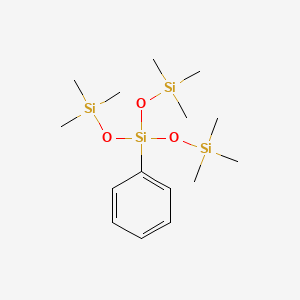
Chemical structure of PHENYL TRIMETHICONE

PHENYL TRIMETHICONE

CAS Number: 2116-84-9

Also Known As:

Category: emollient

EC Number: 218-320-6

Korean Name: 페닐트라이메티콘

1,1,5,5,5-Hexamethyl-3-phenyl-3-[(trimethylsilyl)oxy]trisiloxane

PHENYL TRIMETHICONE is an emollient ingredient used in skincare formulations.

siliconeadds shine and slip

🌍 Regulatory Status

EU: No restriction on fileUS: No restriction on file

📊 Comedogenicity

No data yet
Not rated for this ingredient yet.

📚 Research & Evidence

PUBMED CITATIONS
5
Data sources: EU CosIng PubMed

🔬 The Science

Phenyl trimethicone is a silicone compound that appears across several specialized applications in research, though consumer skincare studies are sparse. Here’s what the available evidence shows:

#1: Hair shine enhancement — In hair care research, phenyl trimethicone was found to increase hair luster (shine) by reducing surface roughness, as confirmed by both instrumental measurement and consumer panel assessment (J Cosmet Sci, 2006). The study used atomic force microscopy to verify that the shine-enhancing effect correlated with smoother hair surfaces. #2: Medical device use — The ingredient was studied as a base component for heavy tamponade agents (medical fillers used in eye surgery).

When combined with silica, phenyl trimethicone formulations showed good optical clarity, appropriate flow properties for injection, and biocompatibility comparable to standard silicone oils used in ophthalmology (Invest Ophthalmol Vis Sci, 2013). However, this research is about medical applications, not cosmetic skincare. #3: Transdermal penetration enhancement — Phenyl trimethicone functions as a penetration enhancer, meaning it can increase how readily substances pass through skin when applied topically. It was used as a carrier in transdermal pain management formulations (Int J Pharm Compd, 2016) and in sunscreen research (Toxicol Ind Health, 2003). Notably, the sunscreen study found that phenyl trimethicone as a solvent could actually reduce unwanted penetration of certain ingredients—suggesting its effects are context-dependent.

#4: Oil interaction — One recent study measured how phenyl trimethicone interacts with oil-absorption materials, finding it had a 9.3% adsorption rate when tested against a fullerene composite (J Cosmet Dermatol, 2024). This was mentioned as part of broader oil-control research, not as a standalone skincare benefit claim. Limitations: The sources provided contain almost no data on phenyl trimethicone’s direct effects on skin health, hydration, irritation, or typical cosmetic performance in consumer products. Most research focuses on its technical properties (viscosity, clarity, injectability) or its role as a carrier for other active ingredients. Claims about anti-aging, moisturizing, or other skincare benefits are not supported by these abstracts.

💧 Skin Type Compatibility

No data yet
Per-skin-type data isn’t curated for this ingredient yet.

⚠️ Don’t Combine With

No data yet
No known incompatibilities on file for this ingredient.

🧴 Products Containing PHENYL TRIMETHICONE

📄 Related Research

Matched by search — not necessarily verified support for every statement above.

Similar Ingredients

AMODIMETHICONE
AMODIMETHICONE
emollient
View
CYCLOHEXASILOXANE
CYCLOHEXASILOXANE
emollient
View
CYCLOMETHICONE
CYCLOMETHICONE
emollient
View
CYCLOPENTASILOXANE
CYCLOPENTASILOXANE
emollient
View
DIMETHICONOL
DIMETHICONOL
emollient
View
SODIUM HYALURONATE DIMETHYLSILANOL
humectant
View
TRIMETHYLSILOXYSILICATE
emollient
View
(20S)-PROTOPANAXADIOL
emollient
View