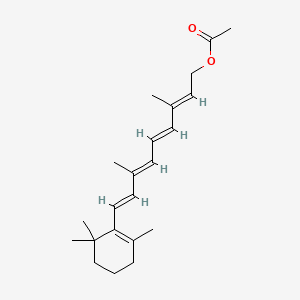
Description: RETINYL ACETATE — mild vitamin A derivative, anti-aging.
All Functions: mild vitamin A derivative, anti-aging
Quick Facts:
- Category: active
- Regulatory Note: Restricted in the EU
Proven Benefits At A Glance:
- Retinyl acetate is a form of vitamin A that can penetrate into the outer layers of skin
- When encapsulated in certain nanoparticles, it becomes more stable and stays in skin longer
- It may support skin’s natural production of certain structural molecules called glycosaminoglycans
- Early research suggests it could support wound healing in specific conditions, though results vary by formulation
- It naturally accumulates in hair follicles when delivered via certain nanoparticle carriers
Safety tier is a starting heuristic from regulatory status and comedogenic rating, not a dermatological verdict — see our Terms for the full disclaimer. Research confidence reflects how many real cited studies back this ingredient, not the strength of their findings.
🧪 RETINYL ACETATE
RETINYL ACETATE
CAS Number: 127-47-9
Also Known As: —
Category: active
EC Number: 204-844-2
Korean Name: 레티닐아세테이트
Retinyl acetate
RETINYL ACETATE is an active ingredient used in skincare formulations.
🌍 Regulatory Status
EU max concentration: (a) 0,05 % Retinol Equivalent (RE) (b) 0,3 % RE
EU conditions: For any cosmetic product containing Retinol, Retinyl Acetate or Retinyl Palmitate the following, labelling is obligatory: ‘Contains Vitamin A. Consider your daily intake before use’.
📊 Comedogenicity
📚 Research & Evidence
🔬 The Science
Retinyl acetate is a provitamin A compound—meaning your skin can convert it into active vitamin A. Here’s what the research actually shows:
#1: Skin penetration and stability. When applied as a simple suspension, retinyl acetate can reach about 20 micrometers deep into the stratum corneum (the outermost dead skin layer) within 30 minutes (Spectrochim Acta A Mol Biomol Spectrosc, 2017). However, retinyl acetate is somewhat unstable in water and breaks down when exposed to UVA light. Researchers have developed nanoparticle carriers—tiny capsules made from polymers—that significantly improve its stability in these conditions. Interestingly, when encapsulated this way, retinyl acetate is absorbed more slowly by skin but then stays in skin tissue longer, with 100% retention observed after 24 hours (Int J Pharm, 2011).
Under a microscope, these nanoparticles appear to accumulate especially in hair follicles. #2: Effects on skin molecules. In lab studies using isolated skin cells from newborn mice, retinyl acetate triggered a dose-dependent increase in the production of sulfated glycosaminoglycans—complex sugars that are key structural components of skin (Connect Tissue Res, 1978). In dermal (deeper skin) cells, a specific concentration produced roughly a 50% increase in these molecules. This matters because glycosaminoglycans help maintain skin hydration and elasticity, though this research was conducted in isolated cells, not whole human skin. #3: Wound healing support. In rats with marginal vitamin A status (not severely deficient, but low), supplemental retinyl acetate feeding enhanced wound tensile strength—a measure of how strong healing tissue becomes—at 5 days post-surgery, though not at 14 days (J Nutr, 1982).
The effect was mild but statistically significant. Notably, this research involved oral feeding to rats with compromised vitamin A status, not topical skin application in humans, so its relevance to skincare is limited. Limitations: Most of these studies were conducted in cell cultures or animal models, not in living human skin. Only one study (Spectrochim Acta A Mol Biomol Spectrosc, 2017) directly measured retinyl acetate behavior in human skin, though it used spectroscopy rather than measuring visible cosmetic outcomes. No sources discuss anti-aging, wrinkle reduction, or other common skincare claims.
💧 Skin Type Compatibility
⚠️ Don’t Combine With
🧴 Products Containing RETINYL ACETATE
📄 Related Research
Matched by search — not necessarily verified support for every statement above.
- Arayachukeat S et al. (2011). Retinyl acetate-loaded nanoparticles: dermal penetration and release of the retinyl acetate. Int J Pharm.
- Shapiro SS et al. (1978). Effect of retinyl acetate on sulfated glycosaminoglycan biosynthesis in dermal and epidermal cells in vitro. Connect Tissue Res.
- Gerber LE et al. (1982). Effect of dietary retinyl acetate, beta-carotene and retinoic acid on wound healing in rats. J Nutr.
- Padula C et al. (2008). Simultaneous determination of benzophenone-3, retinol and retinyl acetate in pig ear skin layers by high-performance liquid chromatography. Biomed Chromatogr.
- Dos Santos L et al. (2017). In vivo confocal Raman spectroscopy and molecular dynamics analysis of penetration of retinyl acetate into stratum corneum. Spectrochim Acta A Mol Biomol Spectrosc.
Similar Ingredients
📰 More News
-
The CCL20-CCR6 axis predominantly drives IL-17-mediated psoriasis while modestly contributing to papain-induced type 2 inflammation
PubMed · 23 days ago
-
SkinCeuticals Just Reformulated Its C E Ferulic Serum
Allure · 14 days ago
-
Are Sunscreen Oils Just Tanning Oils in Disguise? Experts Weigh In
Allure · 14 days ago
-
Update to RIFM fragrance ingredient safety assessment, propenylguaethol, CAS Registry Number 94-86-0
PubMed · 14 days ago
-
Earth Harbor Obscura Night Repair Concentrate Review
Allure · 13 days ago
-
Okay, We’ll Bite: Fruity Perfumes Are Cool
Allure · 13 days ago