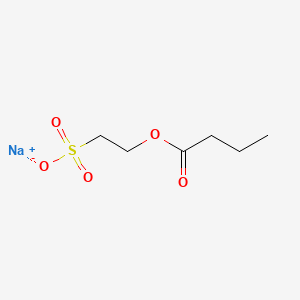
Description: SODIUM COCOYL ISETHIONATE — gentle cleansing agent, common in cleansing bars.
All Functions: gentle cleansing agent, common in cleansing bars
Quick Facts:
- Category: surfactant
Proven Benefits At A Glance:
- A mild surfactant (cleanser ingredient) used in cleansing bars for over 30 years
- Research shows it’s gentler on skin than some other common detergents
- Its larger molecular structure means it stays on the skin surface rather than penetrating deeply
- Can be difficult to dissolve in liquid formulations without special techniques
Safety tier is a starting heuristic from regulatory status and comedogenic rating, not a dermatological verdict — see our Terms for the full disclaimer. Research confidence reflects how many real cited studies back this ingredient, not the strength of their findings.
🧪 SODIUM COCOYL ISETHIONATE
SODIUM COCOYL ISETHIONATE
CAS Number: 61789-32-0 / 58969-27-0
Also Known As: —
Category: surfactant
EC Number: 263-052-5
Korean Name: 소듐코코일이세티오네이트
Fatty acids, coco, 2-sulfoethyl esters, sodium salts
SODIUM COCOYL ISETHIONATE is a surfactant ingredient used in skincare formulations.
🌍 Regulatory Status
📊 Comedogenicity
📚 Research & Evidence
🔬 The Science
Sodium cocoyl isethionate (SCI) is a surfactant—essentially a cleaning agent that helps remove oils and dirt from skin. Here’s what the research tells us about how it works and why formulators use it:
#1: Skin gentleness comes from size. SCI forms larger clusters (called micelles, with a radius of about 33.5 Angstroms) in water compared to other common detergents like sodium dodecyl sulfate (SDS). The stratum corneum—your skin’s outermost protective barrier—has tiny water-filled pores averaging about 29 Angstroms in radius. Because SCI’s micelles are slightly larger than these pores, they physically cannot squeeze through and penetrate deeply into the skin (J Cosmet Sci, 2007).
This is the opposite of SDS, whose smaller micelles can enter these pores and disrupt the skin barrier. Research using radioactive labeling confirmed that SCI penetration is dose-independent, meaning even at higher concentrations, SCI stays on the surface and doesn’t accumulate in the skin (J Cosmet Sci, 2007). #2: It has a long track record in solid bars. SCI has been a primary ingredient in syndet bars (synthetic detergent bars designed to be milder than traditional soap) for more than thirty years and is recognized for good skin compatibility and cost-effectiveness (J Cosmet Sci, 2003). #3: Formulation challenges exist in liquids.
SCI doesn’t dissolve easily in water on its own—the chemistry is unfavorable (J Cosmet Sci, 2003). Formulators must use special techniques like pairing it with other surfactants, swapping sodium ions for ammonium ions, or emulsifying it to keep it dissolved in liquid products. The sources are limited to bar and in vitro studies; broader claims about efficacy or long-term effects aren’t covered here.
💧 Skin Type Compatibility
⚠️ Don’t Combine With
🧴 Products Containing SODIUM COCOYL ISETHIONATE
- New Flag GmbH Foamie Feste Duschpflege
- FOAMIE Hyaluron Shampoo
- Rituals Soin lavant solide cheveux et corps
- Protane Argan Oil of Morocco
- Невская косметика Крем-мыло детское с алоэ вера и подорожником «Ушастый нянь»
- ООО «НАТУРА СИБЕРИКА» Шампунь для волос «BE-CURL.
- Natura Siberica Shamppoing cheveux colorés et abimés
- KORRES Travel Size Greek Yoghurt Foaming Cream Cleanser
- LoveBar Shampoo Bar Detox & Sebum control
- White Castle Saponetta vegetale tea tree
- L’Erbolario Shampoo Solido con estratti di Camomilla e Calendula
- Clinique Fresh Pressed 7-Day System with Pure Vitamin C
- Neutrogena Gel de Limpeza Facial Neutrogena Hydro Boost
- rilastil dermastil pediatric
- l-oreal, L’Oréal Haute Expertise Pure Liss Système soin lissant Shampooing lissage & discipline
- brazilian keratin therapy
- gel dus
- Love Beauty and Planet LOVE BEAUTY AND PLANET Shampooing Solide Vague Volumisante Eau de Coco & Fleur de Mimosa 90g
- Vichy DERCOS Technique – shampooing ultra apaisant cheveux secs ou colorés
- Sanex Biome Protect
📄 Related Research
Matched by search — not necessarily verified support for every statement above.
- Sun JZ et al. (2003). Solubilization of sodium cocoyl isethionate. J Cosmet Sci.
- Ghosh S et al. (2007). Why is sodium cocoyl isethionate (SCI) mild to the skin barrier? – An in vitro investigation based on the relative sizes of the SCI micelles and the skin aqueous pores. J Cosmet Sci.
- Korting HC et al. (1992). In-use tolerability of two new syndet bars with sodium cocoyl isethionate, disodium lauryl sulfosuccinate and wheat starch as major ingredients in differing relations: results of a cross-over trial. Int J Cosmet Sci.
Similar Ingredients
📰 More News
-
The CCL20-CCR6 axis predominantly drives IL-17-mediated psoriasis while modestly contributing to papain-induced type 2 inflammation
PubMed · 23 days ago
-
SkinCeuticals Just Reformulated Its C E Ferulic Serum
Allure · 14 days ago
-
Are Sunscreen Oils Just Tanning Oils in Disguise? Experts Weigh In
Allure · 14 days ago
-
Update to RIFM fragrance ingredient safety assessment, propenylguaethol, CAS Registry Number 94-86-0
PubMed · 14 days ago
-
Earth Harbor Obscura Night Repair Concentrate Review
Allure · 13 days ago
-
Okay, We’ll Bite: Fruity Perfumes Are Cool
Allure · 13 days ago