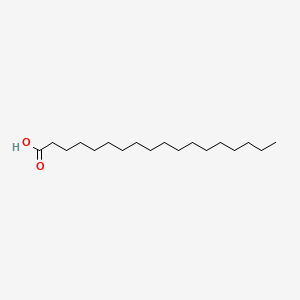
STEARIC ACID
CAS 57-11-4 · also known as acide stéarique, ácido esteárico · emollient · EC 200-313-4 · KR 스테아릭애씨드
Stearic acid
STEARIC ACID is an emollient ingredient used in skincare formulations.
Quick facts
Description: STEARIC ACID — fatty acid, emulsion stabilizer, thickener.
All Functions: fatty acid, emulsion stabilizer, thickener
Quick Facts:
- Category: emollient
- Also Known As: acide stéarique, ácido esteárico
Proven Benefits At A Glance:
- Stearic acid is a fatty acid that can be chemically modified to create water-repellent surfaces
- In research settings, stearic acid has been used to make materials less absorbent of water
- The sources don’t support antimicrobial or skin-specific benefits for stearic acid on its own
- Stearic acid is used in lab studies as a component of delivery systems and coatings, not as a skincare ingredient per se
Chemical Overview
Stearic acid is a white solid with a mild odor. Floats on water. (USCG, 1999) Octadecanoic acid is a C18 straight-chain saturated fatty acid component of many animal and vegetable lipids. As well as in the diet, it is used in hardening soaps, softening plastics and in making cosmetics, candles and plastics. It has a role as a plant metabolite, a human metabolite, a Daphnia magna metabolite and an algal metabolite. It is a long-chain fatty acid, a saturated fatty acid and a straight-chain saturated fatty acid. It is a conjugate acid of an octadecanoate. It derives from a hydride of an octadecane. The CIR Expert Panel concluded that the following ingredients are safe in the present practices of use andconcentration described in the safety assessment when formulated to be non-irritating and non-sensitizing, which may be basedon a QRA…Stearic Acid…
Source(s): ChEBI, Cosmetic Ingredient Review (CIR), CAMEO Chemicals, via PubChem
Comedogenicity
Similar Ingredients

📰 More News
-
The CCL20-CCR6 axis predominantly drives IL-17-mediated psoriasis while modestly contributing to papain-induced type 2 inflammation
PubMed · Jul 11, 2026
-
SkinCeuticals Just Reformulated Its C E Ferulic Serum
Allure · Jul 20, 2026
-
Are Sunscreen Oils Just Tanning Oils in Disguise? Experts Weigh In
Allure · Jul 20, 2026
-
Update to RIFM fragrance ingredient safety assessment, propenylguaethol, CAS Registry Number 94-86-0
PubMed · Jul 20, 2026
-
Earth Harbor Obscura Night Repair Concentrate Review
Allure · Jul 21, 2026
-
Okay, We’ll Bite: Fruity Perfumes Are Cool
Allure · Jul 21, 2026