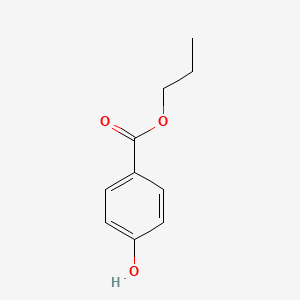
PROPYLPARABEN
CAS 94-13-3 · also known as propyle paraben, propilparabeno · preservative · EC 202-307-7 · KR 프로필파라벤
Propyl 4-hydroxybenzoate
PROPYLPARABEN is a preservative ingredient used in skincare formulations.
Quick facts
Description: PROPYLPARABEN — preservative.
All Functions: preservative
Quick Facts:
- Category: preservative
- Also Known As: propyle paraben, propilparabeno
Proven Benefits At A Glance:
- Propylparaben is a preservative used in over 22,000 cosmetic products at concentrations up to 0.4% (single ingredient) or 0.8% (in mixtures)
- It does penetrate the skin but is metabolized within viable skin layers; only about 1% reaches the body unmetabolized
- Animal studies show propylparaben is noncarcinogenic and does not cause birth defects
- Propylparaben exhibits weak binding to estrogen receptors—at least 1,000 times less potent than natural estradiol
- Propylparaben is rarely irritating or sensitizing to normal skin at cosmetic-use concentrations
- Some animal studies suggest effects on sperm counts and reproductive development warrant further investigation
Chemical Overview
Propyl-4-hydroxybenzoate appears as colorless crystals or white powder or chunky white solid. Melting point 95-98 °C. Odorless or faint aromatic odor. Low toxicity, Tasteless (numbs the tongue). pH: 6.5-7.0 (slightly acidic) in solution. Propylparaben is the benzoate ester that is the propyl ester of 4-hydroxybenzoic acid. Preservative typically found in many water-based cosmetics, such as creams, lotions, shampoos and bath products. Also used as a food additive. It has a role as an antimicrobial agent and an antifungal agent. It is a member of phenols, a benzoate ester and a paraben. It is functionally related to a propan-1-ol and a 4-hydroxybenzoic acid. The CIR Expert Panel concluded that the following 20 parabens are safe in cosmetics in the present practices of use and concentration described in the safety assessment when the sum of the combined concentration of parabens in any given formulation does not exceed 0.8 %…Propylparaben…
Source(s): ChEBI, Cosmetic Ingredient Review (CIR), CAMEO Chemicals, via PubChem
Comedogenicity
Similar Ingredients

📰 More News
-
The CCL20-CCR6 axis predominantly drives IL-17-mediated psoriasis while modestly contributing to papain-induced type 2 inflammation
PubMed · Jul 11, 2026
-
SkinCeuticals Just Reformulated Its C E Ferulic Serum
Allure · Jul 20, 2026
-
Are Sunscreen Oils Just Tanning Oils in Disguise? Experts Weigh In
Allure · Jul 20, 2026
-
Update to RIFM fragrance ingredient safety assessment, propenylguaethol, CAS Registry Number 94-86-0
PubMed · Jul 20, 2026
-
Earth Harbor Obscura Night Repair Concentrate Review
Allure · Jul 21, 2026
-
Okay, We’ll Bite: Fruity Perfumes Are Cool
Allure · Jul 21, 2026