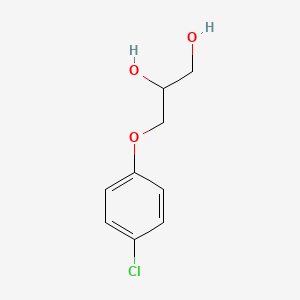
Description: CHLORPHENESIN — preservative.
All Functions: preservative
Quick Facts:
- Category: preservative
Proven Benefits At A Glance:
- Chlorphenesin is a preservative approved for use in cosmetics and personal care products
- It can break down when exposed to UV light, creating byproducts that may be more harmful to aquatic organisms
- Laboratory studies show it can damage certain human cell types at concentrations used in approved products
- It is effective at stopping growth of many common bacteria found in cosmetics
- Some bacterial strains, particularly Pseudomonas aeruginosa, can resist its antimicrobial effects
Safety tier is a starting heuristic from regulatory status and comedogenic rating, not a dermatological verdict — see our Terms for the full disclaimer. Research confidence reflects how many real cited studies back this ingredient, not the strength of their findings.
🧪 CHLORPHENESIN
CHLORPHENESIN
CAS Number: 104-29-0
Also Known As: —
Category: preservative
EC Number: 203-192-6
Korean Name: 클로페네신
1,2-Propanediol, 3-(4-chlorophenoxy)-
CHLORPHENESIN is a preservative ingredient used in skincare formulations.
🌍 Regulatory Status
EU max concentration: 0.3%
📊 Comedogenicity
📚 Research & Evidence
🔬 The Science
Chlorphenesin is a preservative compound used in cosmetics to prevent microbial contamination. Here’s what current research reveals about how it behaves:
#1: Antimicrobial effectiveness—Chlorphenesin successfully inhibits growth of 42 bacterial strains tested, including species from Acinetobacter, Burkholderia cepacia complex, and Stenotrophomonas maltophilia (J Appl Microbiol, 2022). However, it has limitations: all Pseudomonas aeruginosa strains tested were able to grow despite exposure to chlorphenesin, and some Pluralibacter gergoviae strains also showed resistance (J Appl Microbiol, 2022). This means chlorphenesin works well for many cosmetic preservation challenges but cannot be relied upon as a complete antimicrobial solution. #2: UV breakdown and environmental concerns—When chlorphenesin is exposed to UV light (the kind in sunlight), it breaks down into byproducts including 4-chlorophenol (Int J Cosmet Sci, 2022).
Testing on aquatic bacteria showed that as UV exposure time increased, the overall toxicity of the degraded chlorphenesin solution increased, with 4-chlorophenol being a major contributor to this increased toxicity (Int J Cosmet Sci, 2022). #3: Effects on human cells—Laboratory studies using immortalized human meibomian gland epithelial cells (cells that produce oils in the eye) found concerning results (Exp Eye Res, 2020). Exposure to chlorphenesin for just 30 minutes reduced activity of an important cellular signaling pathway (the Akt pathway) in a dose-dependent manner—meaning the effect got stronger at higher doses (Exp Eye Res, 2020). After 24 hours of treatment at concentrations equal to or close to approved human use levels, chlorphenesin caused cellular atrophy and cell death (Exp Eye Res, 2020).
The research notes that previous studies reported chlorphenesin has been toxic to corneal and conjunctival epithelial cells, liver, and kidney tissue, and can irritate the eye (Exp Eye Res, 2020). #4: How the body processes it—When people use cosmetics containing chlorphenesin, the body converts it into metabolites (breakdown products) including 4-chlorophenoxyacetic acid (4-CPA) and other compounds that appear in urine (Rapid Commun Mass Spectrom, 2021). After applying 8 grams of sunscreen containing 0.25% chlorphenesin, urinary concentrations of 4-CPA reached up to approximately 1500 ng/mL after single application and 2300 ng/mL after multiple applications (Rapid Commun Mass Spectrom, 2021). #5: Regulatory compliance—Analysis of 61 commercial cosmetic products found that among 27 products labeled as containing chlorphenesin, concentrations ranged from 0.10 to 2.67 mg/g, with none exceeding the regulatory maximum limit of 3 mg/g (0.3%) (Drug Test Anal, 2024).
Importantly, no undeclared chlorphenesin was found in the 34 products not labeled with it (Drug Test Anal, 2024). In summary: while chlorphenesin is effective as a preservative against many bacteria, the available research shows it has notable limitations (some bacteria resist it), breaks down into potentially more toxic compounds in sunlight, and causes cell damage in laboratory tests at approved use concentrations. The long-term significance of these findings for real-world skin safety remains incompletely characterized in the available literature.
💧 Skin Type Compatibility
Derived from this ingredient’s irritancy potential and comedogenicity rating against the needs of each skin type — e.g. oily and acne-prone skin are marked down for pore-clogging ingredients, sensitive skin for irritants. A starting heuristic, not a dermatological verdict.
⚠️ Don’t Combine With
🧴 Products Containing CHLORPHENESIN
- Simple Regeneration Age Resisting Day Cream
- Roots of strength body shop
- ColourB4 Effaceur de coloration
- Charlotte Tilbury magic eye
- Eveline Cosmetics Cooling compress hydrogel eye pads
- Ivatherm Ivapur
- Alès groupe, Laboratoires Liérac, Liérac, Liérac Paris, Magnificence Magnificence nuit gel-en-baume lissant détoxifiant rides – fermeté – éclat
- L’Oréal, L’Oreal Paris Revitalift 1.5% Pure Hyaluronic Acid Serum for Face
- PEGGY SAGE Gommage Corps Fleur de Cerisier
- Provence Santé crème légère anti âge
- Carrefour, Carrefour Kids Splashy bain-douche à l’extrait de framboise
- Giardino dei Sensi Crema Manu romantica orchidea
- Neutrogena Gel de Limpeza Facial Neutrogena Hydro Boost
- NEUTROGENA DEEP CLEAN 2 in 1 pure frische
- Istituto Elvetico Sanders Alodermin pre shampoo
- Biafine lait apres soleil nourrissant
- bebe, bebe young care beruhigende bodylotion
- Neutrogena Hydro Boost Aqua-Gel
- Deliplus Sérum facial reparador Micro Cápsulas
- Deliplus facial clean
📄 Related Research
Matched by search — not necessarily verified support for every statement above.
- Ben Ouaghrem M et al. (2022). Characterization of photoproducts and global ecotoxicity of chlorphenesin: A preservative used in skin care products. Int J Cosmet Sci.
- Wang J et al. (2020). Toxicity of the cosmetic preservatives parabens, phenoxyethanol and chlorphenesin on human meibomian gland epithelial cells. Exp Eye Res.
- Rubio A et al. (2021). Chromatographic-mass spectrometric analysis of the urinary metabolite profile of chlorphenesin observed after dermal application of chlorphenesin-containing sunscreen. Rapid Commun Mass Spectrom.
- Lu YW et al. (2024). Determination of chlorphenesin in cosmetics, a preservative that can affect anti-doping test result interpretations. Drug Test Anal.
- Youenou B et al. (2022). In vitro study to evaluate the antimicrobial activity of various multifunctional cosmetic ingredients and chlorphenesin on bacterial species at risk in the cosmetic industry. J Appl Microbiol.
Similar Ingredients


📰 More News
-
The CCL20-CCR6 axis predominantly drives IL-17-mediated psoriasis while modestly contributing to papain-induced type 2 inflammation
PubMed · 23 days ago
-
SkinCeuticals Just Reformulated Its C E Ferulic Serum
Allure · 14 days ago
-
Are Sunscreen Oils Just Tanning Oils in Disguise? Experts Weigh In
Allure · 14 days ago
-
Update to RIFM fragrance ingredient safety assessment, propenylguaethol, CAS Registry Number 94-86-0
PubMed · 14 days ago
-
Earth Harbor Obscura Night Repair Concentrate Review
Allure · 13 days ago
-
Okay, We’ll Bite: Fruity Perfumes Are Cool
Allure · 13 days ago