Mia Seilern
⚠️ Data is provided for informational purposes only. It may contain inaccuracies and should be independently verified. This is not medical advice. Consult a healthcare professional before making health decisions.

Description: POLYSORBATE 80 — emulsifier, solubilizer.

All Functions: emulsifier, solubilizer

Quick Facts:

  • Category: surfactant

Proven Benefits At A Glance:

  • Polysorbate 80 is a non-ionic detergent used as an emulsifier in pharmaceuticals, foods, and cosmetics
  • It can help dissolve poorly water-soluble ingredients like quercetin, increasing solubility up to 3.6 times in lab conditions
  • In skin safety testing with UV light exposure, polysorbate 80 showed no UV-related damage to skin cells
  • Allergic reactions to polysorbate 80 are possible but uncommon; most people with PEG or polysorbate 80 allergies can safely receive products containing it
  • At very high concentrations in lab settings, polysorbate 80 can affect nerve cell function, but this is not directly applicable to skincare use
Safety: Generally Low ConcernResearch confidence: GoodCommon fungal-acne trigger

Safety tier is a starting heuristic from regulatory status and comedogenic rating, not a dermatological verdict — see our Terms for the full disclaimer. Research confidence reflects how many real cited studies back this ingredient, not the strength of their findings.

🧪 POLYSORBATE 80

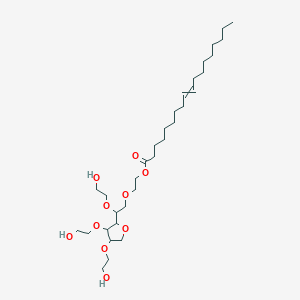
Chemical structure of POLYSORBATE 80

POLYSORBATE 80

CAS Number: 9005-65-6

Also Known As:

Category: surfactant

Korean Name: 폴리솔베이트80

Sorbitan, mono-9-octadecenoate, poly(oxy-1,2-ethanediyl) derivs., (Z)-

POLYSORBATE 80 is a surfactant ingredient used in skincare formulations.

emulsifiersolubilizer

🌍 Regulatory Status

EU: No restriction on fileUS: No restriction on file

📊 Comedogenicity

No data yet
Not rated for this ingredient yet.

📚 Research & Evidence

PUBMED CITATIONS
5
Data sources: EU CosIng PubMed

🔬 The Science

Polysorbate 80 is classified as a non-ionic detergent derived from polyethoxylated sorbitan and oleic acid (Mol Pain, 2023). Its primary role in skincare formulations is as an emulsifier—a substance that helps mix ingredients that normally don’t blend well together, like oils and water. #1: Solubility enhancement. One documented benefit in research is polysorbate 80’s ability to increase how well certain ingredients dissolve in water. In a study examining the antioxidant ingredient quercetin, adding polysorbate 80 increased its solubility between 2.87 to 3.63 times compared to water alone, depending on concentration used (J Public Health Afr, 2023). This matters because many beneficial skincare actives have naturally poor water solubility, so polysorbate 80 can help formulate them into usable products.

#2: UV safety profile. When researchers tested polysorbate 80 in nanoemulsion formulations (tiny droplet-based systems) on human skin fibroblasts under UVA light exposure, they found no UV-related damage. In fact, polysorbate 80 was identified as “one of the most promising candidates for skin-friendly emulsifiers in sensitive applications involving exposure to UV light” (Int J Pharm, 2024). However, this was lab-based testing on cells, not full human skin studies. #3: Allergy considerations. While allergic reactions to polysorbate 80 do occur, they appear uncommon. One study of 126 skin allergy tests found polysorbate 80 positivity in 12.7% of cases, with no statistically significant difference between people screened before potential exposure versus those with suspected reactions (Vaccines (Basel), 2023).

Notably, research on patients with confirmed polysorbate 80 allergies found that people with polysorbate 80 mono-allergy (allergy to polysorbate 80 alone, not cross-reacting with similar ingredients) tolerated products containing it without problems (J Allergy Clin Immunol Pract, 2023). The sources do not provide data on how common polysorbate 80 allergy is in the general population. One important note: At very high concentrations (0.9–250 micrograms per milliliter) in controlled lab experiments, polysorbate 80 affected how nerve cells function by influencing sodium channels (Mol Pain, 2023). However, the researchers conducting this study explicitly cautioned that “in vitro experiments using polysorbate 80 with neurons should be conducted with caution” and did not translate these findings to actual skincare safety concerns at typical product concentrations.

💧 Skin Type Compatibility

No data yet
Per-skin-type data isn’t curated for this ingredient yet.

⚠️ Don’t Combine With

No data yet
No known incompatibilities on file for this ingredient.

🧴 Products Containing POLYSORBATE 80

📄 Related Research

Matched by search — not necessarily verified support for every statement above.

Similar Ingredients

CETEARETH-20
CETEARETH-20
surfactant
View
CETEARETH-25
CETEARETH-25
surfactant
View
CETEARYL GLUCOSIDE
CETEARYL GLUCOSIDE
surfactant
View
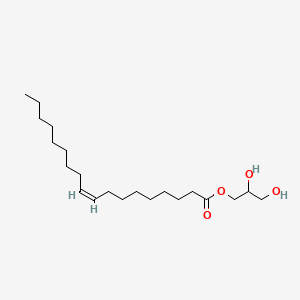
GLYCERYL OLEATE
GLYCERYL OLEATE
emollient
View
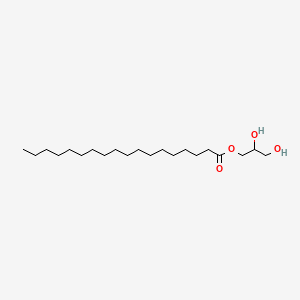
GLYCERYL STEARATE
GLYCERYL STEARATE
emollient
View
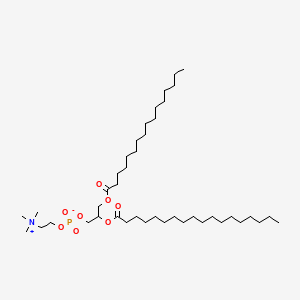
HYDROGENATED LECITHIN
emollient
View
LECITHIN
LECITHIN
emollient
View
PEG-100 STEARATE
PEG-100 STEARATE
surfactant
View